

In the early hours of January 30, Uganda’s main opposition leader Robert Kyagulanyi Ssentamu, who is commonly known by his stage name Bobi Wine posted an update on X, alongside a screenshot of Gen. Muhoozi Kainerugaba mocking him as a “selfie” and “YouTube” rebel.
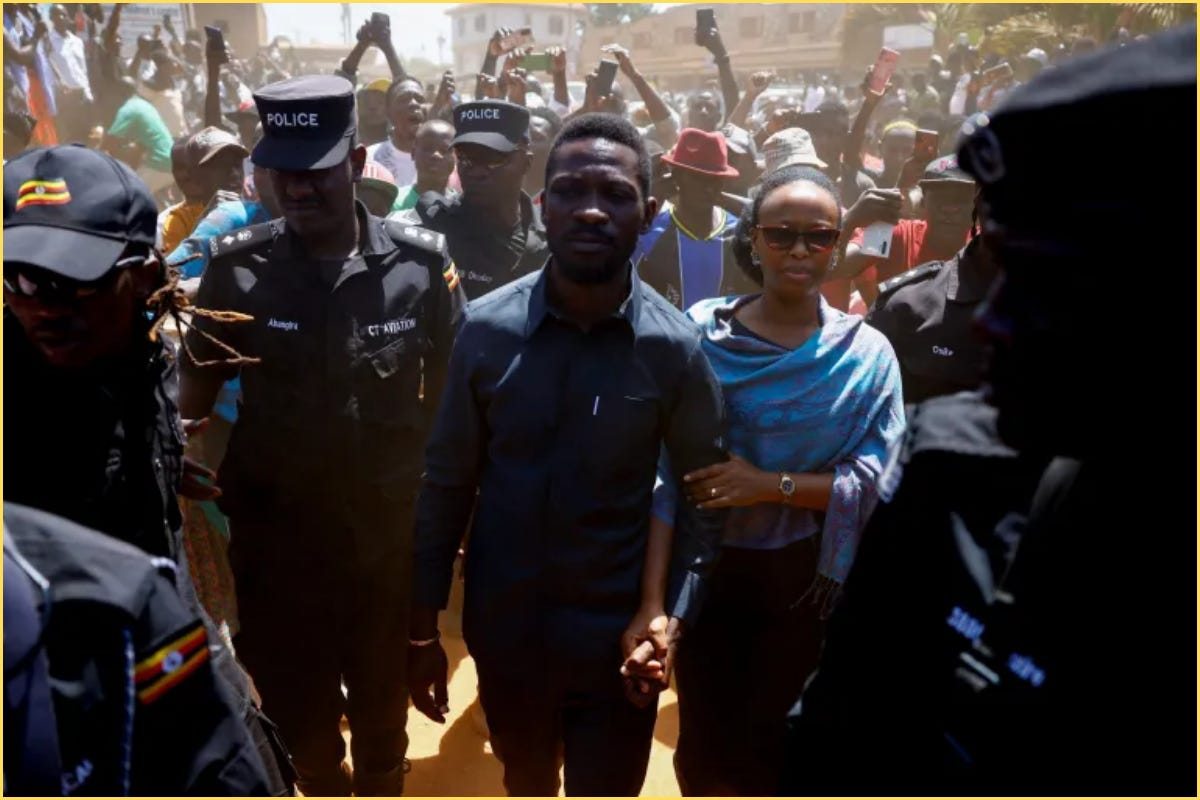
“A rebel without a gun,” he wrote. “Hiding in plain sight and yet you can’t find me because I’m concealed by the people. Catch me if you can.”


By that point, the country’s chief of defence forces had already escalated the confrontation. Muhoozi had described Wine as a fugitive, suggested troops had orders to bring him in “dead or alive,” accused the U.S. Embassy of helping him escape, and publicly announced a suspension of military cooperation with Washington, including coordination linked to operations in Somalia.
Within hours, the accusation against the US was deleted. An apology followed. The suspension was walked back. Military cooperation, he said, would continue as usual.
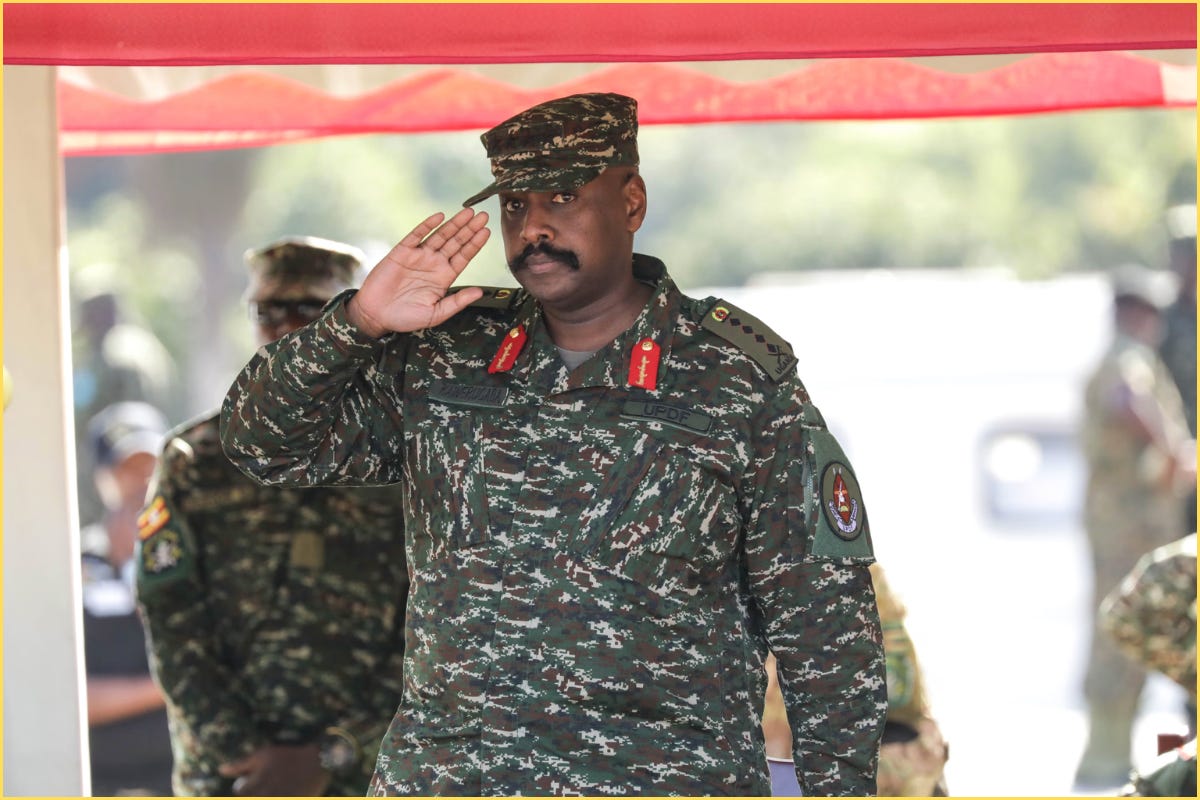
And both men were still posting.
If the episode reads like parody, it is only because it unfolded in full public view. But this was not theater. It was a contest over the direction Uganda would head towards. A possible turn toward a Bobi Wine-led alternative, or continued rule under Museveni in the short term and, in the long term, under his chosen successor, his son Muhoozi Kainerugaba.
the two realities
Uganda’s January 15 election returned President Yoweri Museveni to office for a seventh term. He has ruled the country since taking power through a military takeover in 1986. The Electoral Commission announced a decisive result, roughly 71.65% of the vote for the incumbent and 24.7% for Wine. The opposition rejected the outcome, citing ballot irregularities, intimidation, and suppression.
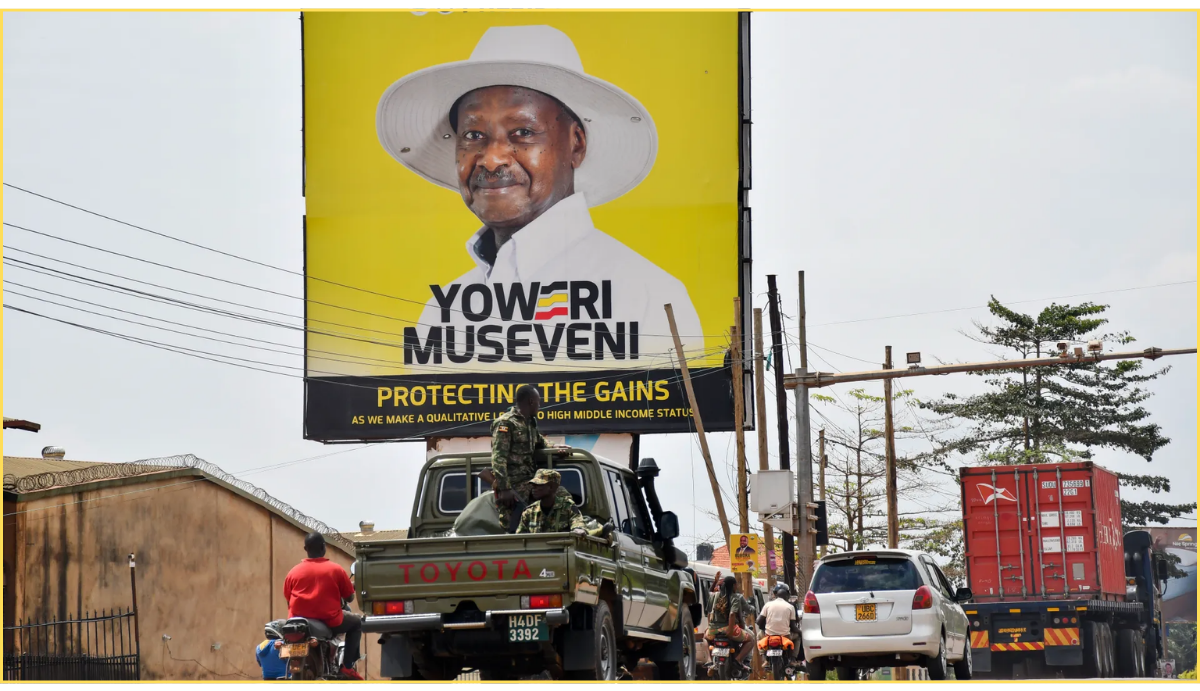
An internet blackout preceded the vote and lingered afterward. The shutdown was justified as a measure against misinformation. It also limited public visibility during the most sensitive phase of counting and enforcement.
In the days after the results were declared, two official narratives began circulating simultaneously.
In one, government ministers insisted the country was calm. They said the opposition leader was not being pursued. They dismissed talk of a manhunt as “drama.”
In the other, the country’s top military officer announced arrests, labeled opposition supporters “terrorists,” claimed dozens had been killed in post-election operations, and openly threatened Wine.

The contradiction was not subtle.
It showed that the civilian government and the military were operating in tandem, pursuing the same objective but through different tones, one was projecting reassurance, the other projecting force.
the raid
On the night of January 23, soldiers raided Wine’s residence in Magere, outside Kampala.
The following day, Barbie Kyagulanyi spoke to the media from the hospital. She said soldiers had forced their way into the home late at night, pointed guns at her, demanded access to her phones, and filmed her during the encounter. She described the experience as humiliating and said she lost consciousness before being taken for medical treatment.
On January 25, Gen. Kainerugaba responded on X.
“My soldiers did not beat up Barbie,” he wrote. “We do not beat up women. They are not worth our time. We are looking for her cowardly husband.”
On January 29, he escalated. He posted a photograph of Barbie seated on the floor during the raid and wrote: “This is when our soldiers captured and then released Kabobi’s wife Barbie. She was very helpful in helping us find her husband.”. He has since deleted that post. In another post, he mocked Wine directly: “Kabobi is next… The definition of an IDIOT!” and “As far as I’m concerned we captured the man, Barbie… The fugitive on the run is the wife… Kabobi” .
“Kabobi” is a nickname made up by Muhoozi to mock Wine’s stage name “Bobi.” In the Luganda language, it suggests something small or unimportant, like calling him a “little Bobi” to make fun of his poor background and make him seem weak in politics.
He has deleted these posts from Jan 29.
In the early hours of January 30, Muhoozi added: “Barbie was a decent lady. Whatever she said later was probably for the benefit of her castrated husband.” (he deleted this tweet). Minutes later, he insisted that any soldier who had “attempted to touch Barbie” would be punished and inviting details.
Later that morning, Wine posted his own account. He alleged that soldiers had held his wife at gunpoint, demanded her phone passwords and his whereabouts, torn her nightdress while filming her, lifted her by the torn fabric, and that she later lost consciousness due to high blood pressure and was rushed to hospital.

The raid shifted the crisis from the electoral sphere into the domestic sphere. Whatever the precise details of the encounter, the search had extended into private space. And the argument over what happened was now being conducted in public, in real time.
The assault allegation was not handled through formal channels. It was contested through posts, screenshots, and taunts. Each message drew hundreds of thousands of views.
Political power was being exercised and contested through social media.
the general as narrator
Gen. Kainerugaba uses his personal X account as a channel for operational updates and political commentary.
Since the contest election results, he announced arrests of opposition figures, including MP Muwanga Kivumbi. He declared that over 2,000 opposition supporters had been detained. He banned Wine, as chief of defence forces (and presumed heir to his father), from future participation in Uganda’s electoral exercises.
He alternated between declaring peace and issuing new threats.
At one point, he warned that any foreign power assisting Wine’s escape would create a “serious rupture” in relations. Shortly afterward, he accused the U.S. Embassy in Kampala of aiding Wine and announced that the Uganda People’s Defence Forces were suspending all cooperation with the current U.S. administration in Kampala, explicitly including joint work in Somalia, where Ugandan troops make up one of the largest contingents in regional security operations in that country, making any suspension strategically significant beyond Uganda’s borders.
“We, as UPDF, suspend all cooperation with the current administration at the US Embassy in Kampala. This includes our work in Somalia,” he wrote.
Within an hour, the posts were deleted. A public apology followed.
“I was being fed wrong information,” he wrote at 04:42 GMT, adding that military cooperation with the United States would continue as usual.
The rapid reversal revealed a boundary.
Internal coercion could be publicly displayed. External escalation required recalibration.
Muhoozi’s social media behavior is not impulsive, it is characteristic. This is how he has always consistently operated. Back in May, I wrote about his online threats, public taunts, and open displays of coercive authority, including a now-infamous post boasting that an aide to Bobi Wine was “in my basement”.
This is also the same pattern that saw him previously threaten to capture Nairobi in two weeks, forcing a diplomatic apology to Kenya.
how museveni turned uganda into a one-family state

After nearly four decades in power, President Yoweri Museveni has reshaped Uganda’s political system to entrench personal rule, undermining constitutional checks and positioning his son, Gen. Muhoozi…
the american reaction
The episode drew immediate attention in Washington.
The following day, U.S. Senator Jim Risch, chair of the Senate Foreign Relations Committee, responded… on X. Muhoozi, he said, had “crossed a red line,” and the United States would reevaluate its security partnership with Uganda, including sanctions and military cooperation. Deleting tweets and issuing what he called “hollow apologies” would not be enough. The U.S., he warned, would not tolerate instability and recklessness where American personnel and interests were at stake.
The warning carries weight. Uganda receives hundreds of millions of dollars annually in U.S. assistance spanning health, development, security cooperation, and military training programs. Washington supports Uganda’s regional deployments and counterterrorism role, and Kampala relies on that partnership for funding, training, and diplomatic cover.
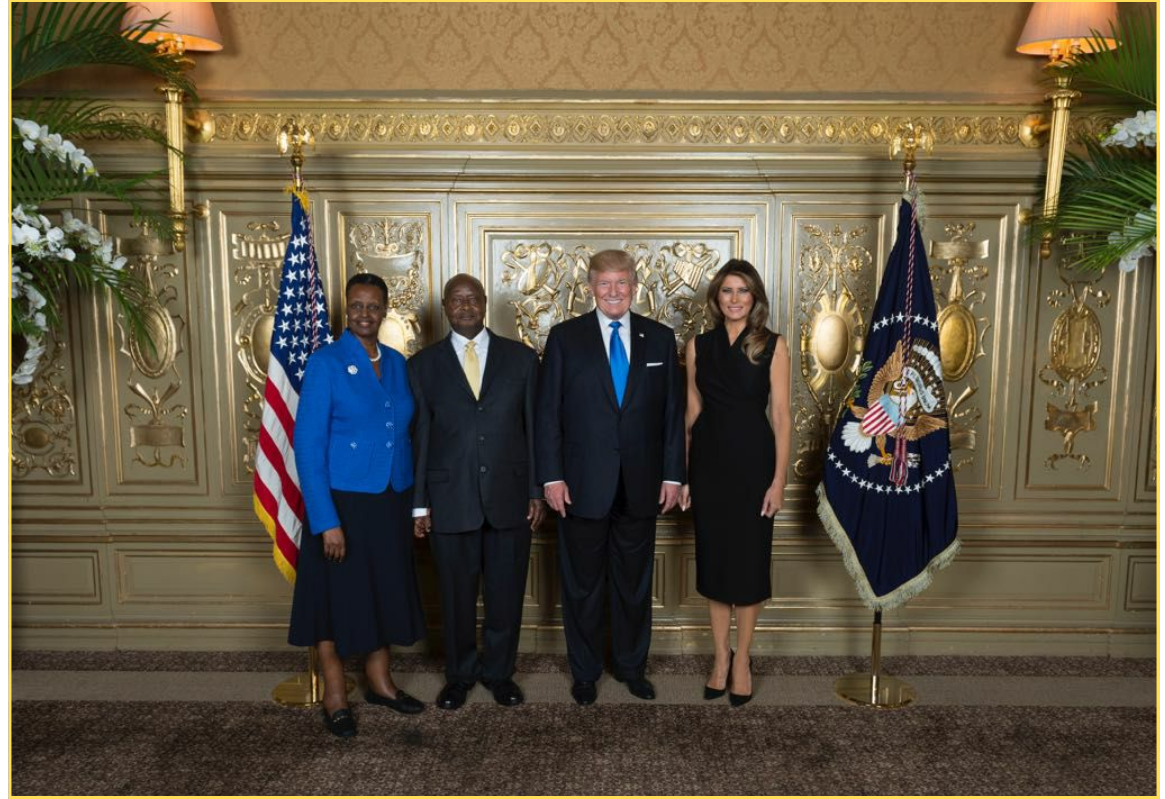
Soon after, Muhoozi tweeted that after nearly eleven years on X and more than a million followers, he would reduce his interactions and return to fasting and praying.
The sequence of threat of rupture, suspension, deletion, apology, diplomatic reassurance, unfolded in hours and whatever the motivation behind the reversal, the scale of U.S. assistance and security cooperation helps explain why the accusation against the embassy could not stand for long.
hiding in plain sight
Meanwhile, Wine continued posting.
His strategy was simple: proof of life, proof of movement, proof of support.
He framed himself as protected by “the people.” He described security operatives searching for him in Busabala and Gomba. He suggested the military’s inability to locate him was evidence of weakness.
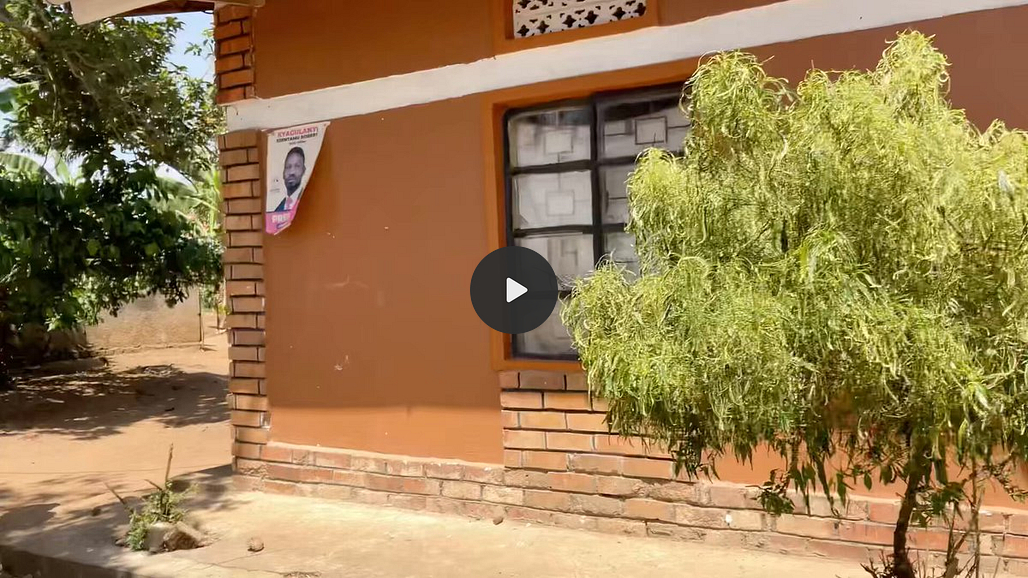
The dynamic created an unusual spectacle: the army searching for one man, and the man narrating the search.
On February 3, Wine posted another update. Military forces, he said, had re-entered his Magere residence the previous night and were now occupying it fully. No family member had been allowed access since the initial January 23 raid. He said he had not even been able to assess what had been taken, damaged, or vandalized.
Hours later, Gen. Kainerugaba posted again. He had earlier claimed he would reduce his activity on X but then deleted that announcement as well. Quoting criticism from the U.S. Senate Foreign Relations Committee, he corrected his title and dismissed the suggestion that he had crossed any “red line.” The United States, he wrote, was free to reassess relations, but it would “never DEMEAN and DEGRADE us” or reduce Uganda to “slaves.”

In the forty-eight hours leading up to that post, he amplified a coordinated defense instead of taking a break from X like he said he would. He retweeted allies who framed the U.S. rebuke as colonial overreach. One compared him to anti-colonial figures like Mandela and Lumumba. Another insisted the election had been “free and fair” and that Washington had no authority to question it. A cabinet minister suggested the American criticism was merely a distraction from the Epstein Files controversy at home.
The message was that sovereignty was under threat, foreign interference was real, and national pride demanded resistance. The tone ranged from defiant to conspiratorial. It also carried a certain irony. Uganda is largely insignificant to the United States beyond serving as a pool of boots on the ground for regional security operations in places like Somalia, South Sudan and the DRC and even in that role, they can be replaced. Yet the framing cast the dispute as part of a grand global confrontation.
On February 4, he escalated again. “I still demand $1 billion from the USA for the UPDF annually. And they will pay it,” he wrote, and (of course deleted after). The audacity was striking. After threatening to suspend cooperation, apologizing, and recalibrating, he pivoted to demanding tribute-level funding in public. Whether meant as provocation, leverage, or performance, the post reinforced the pattern: confrontation first, calculation later.
It is easy to read all of this as theater. It is not.
The stakes are real.
the succession question
President Museveni is 81. This term is widely expected to be his last, although Paul Biya was reelected in Cameroon at 92, making it premature to rule out another Museveni run if he remains politically and physically able too, or, at minimum, still breathing.
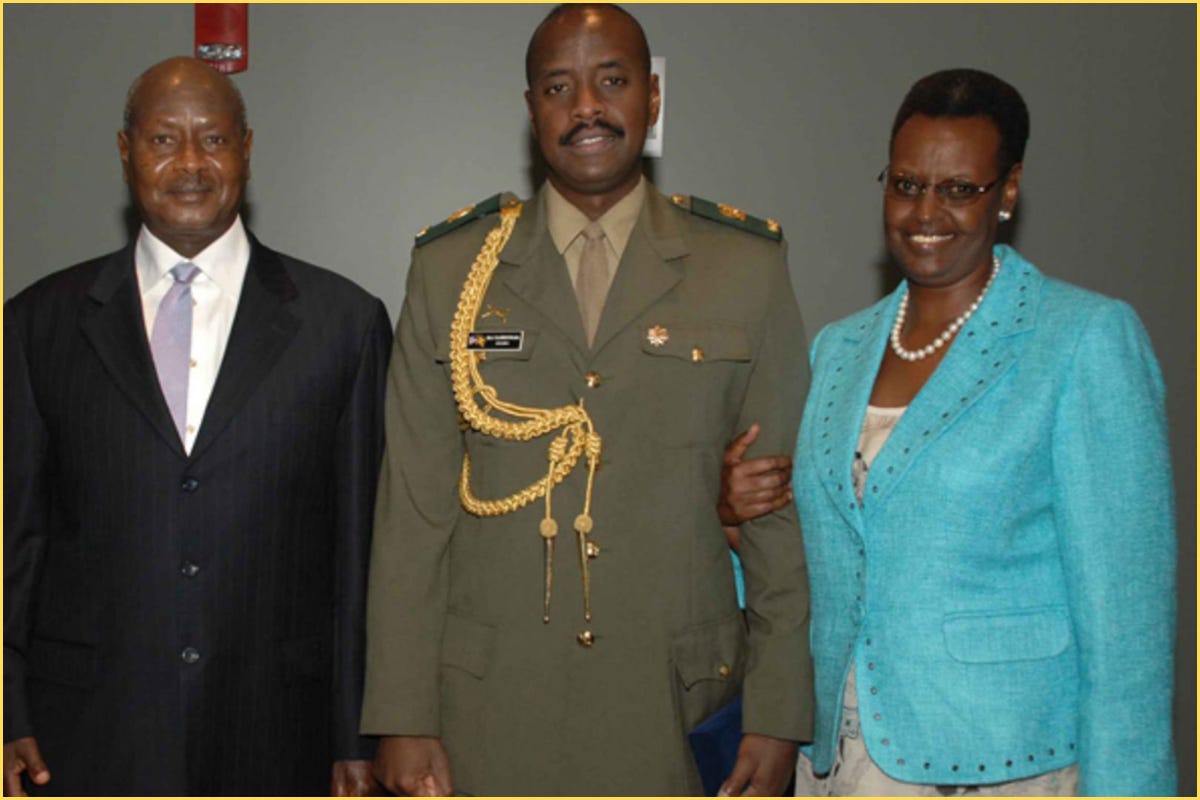
His son, Gen. Kainerugaba, is frequently discussed as a potential successor. Whether or not succession is imminent, the politics of positioning are visible.
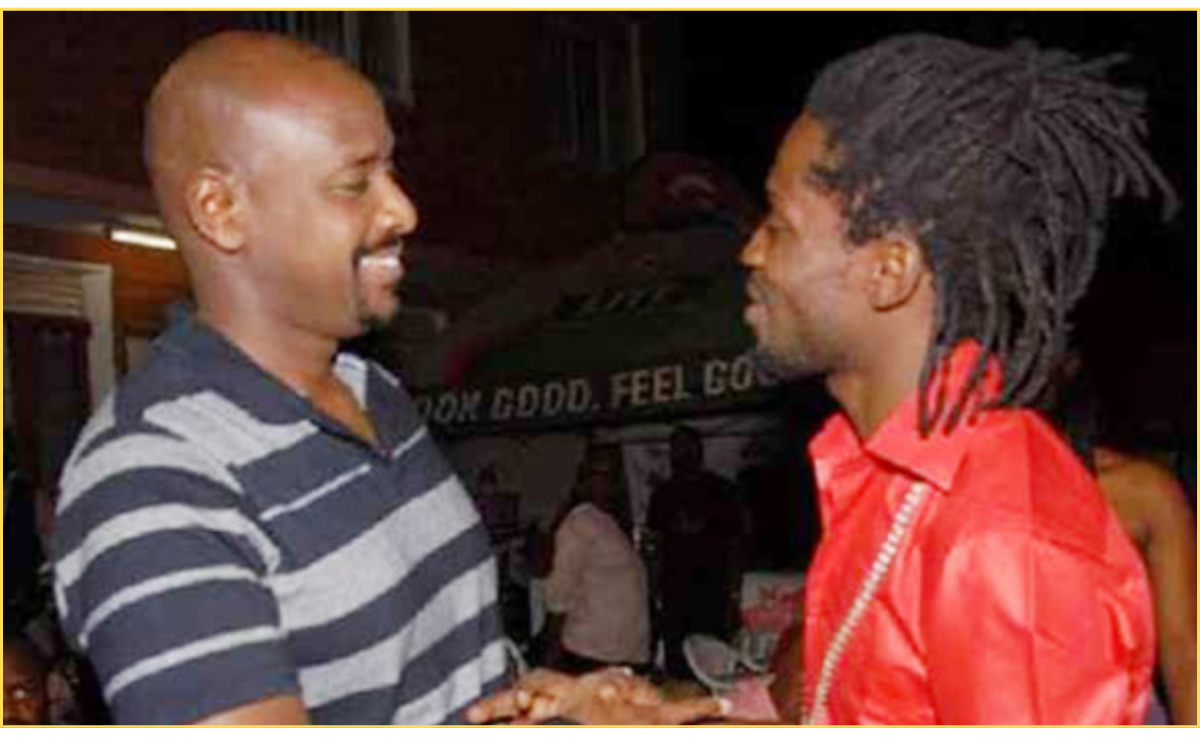
Muhoozi has long treated Bobi Wine not as a routine opponent but as a threat to regime continuity. In 2022, he wrote plainly: “Kabobi should know that we will never allow him to be President of this country.” Last month, he declared Wine “wanted” and giving ultimatums that framed him as a destabilizing force. Muhoozi has always been consistent, a Wine presidency was not an acceptable outcome.
Inside ruling coalitions, public displays of loyalty, toughness, and ideological clarity are signals. They show commitment to continuity. They warn potential rivals. They reassure military elites and party loyalists that power will not drift.
Seen in that light, the general’s posts were not only aimed at Bobi Wine. They were messages to the security establishment, the National Resistance Movement hierarchy, and anyone inside the system calculating the future. They signaled that succession, when it comes, will be managed and that dissent, even at the margins, will be contained.
The performance of control can be as important as control.
But performance carries risk. It introduces volatility. It compresses decision cycles. It invites international reaction.
The accusation against the U.S. Embassy, which was at first quickly withdrawn is a case study in that risk.
the precedent
The immediate crisis may subside. Wine may reappear publicly. He may be arrested. He may leave the country. The security operations may recede from headlines.
What will remain is the method.
Post-electoral consolidation in Uganda is no longer conducted solely through quiet detentions and closed-door directives. It is narrated in real time. It is argued online. It is retracted, reframed, reposted.
The absurdity of the spectacle should not obscure its function.
Power is being exercised. It is simply being exercised loudly and uniquely.
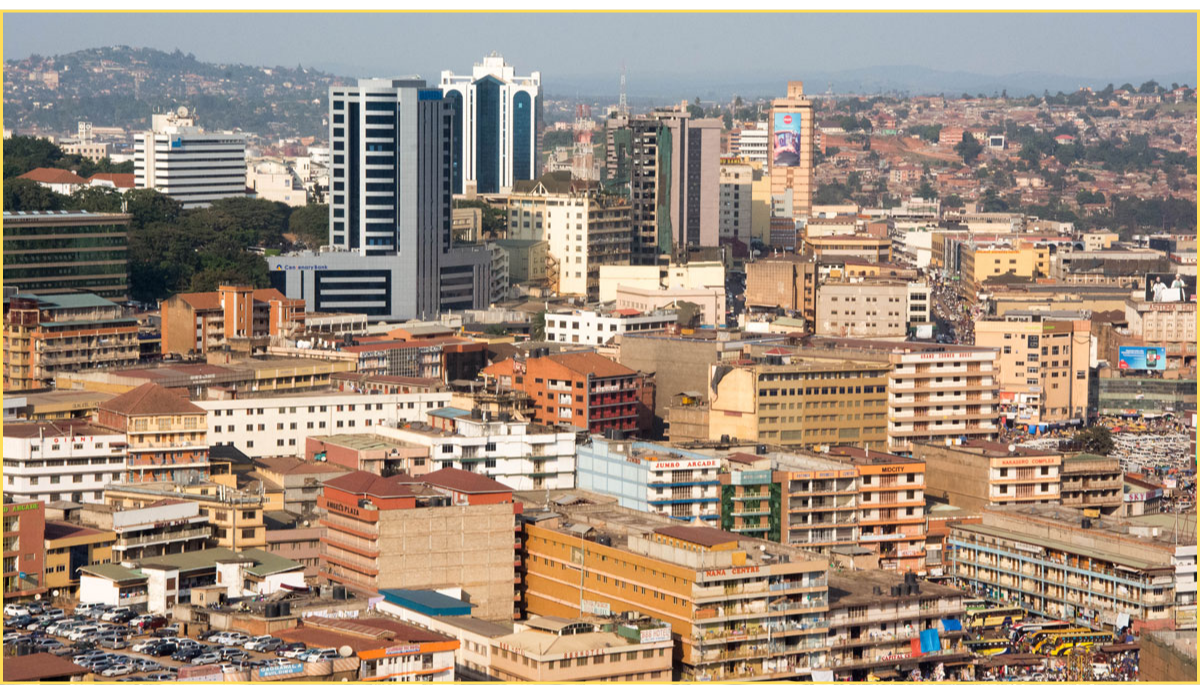
And in the background of the noise sits the central reality: Uganda has not experienced a peaceful presidential transfer of power ever and that Yoweri Museveni has led the country for nearly 40 fucking years.
editor’s note
At the time of this article’s publication, Bobi Wine remains in hiding, with his most recent public update posted on February 3. Gen. Kainerugaba continues to post actively on X, still deleting his more diplomatically volatile posts shortly after posting them.