

Hello everyone, I hope you had a great weekend. This piece is a little long and begins partly as a travel blog before turning into a regular article. I included the story of my trip because it gives a tiny bit of context, but honestly, I also wanted an excuse to post some of my photos and since this is my publication, I can. If you are not interested in either, feel free to skip ahead to the main article.
In April 2023, my brother and I landed in Tangier with backpacks and a loose plan to travel down the Atlantic coast of Africa. We hoped to cross Morocco and Western Sahara, continue through Mauritania and eventually reach Dakar, the capital of Senegal overland.


We travelled first through Chefchaouen, Fez, Rabat and Marrakesh. Fez was exhilarating but unsettling after dark, when the shops closed and the medieval alleys around our hostel emptied. Rabat was clean, orderly and slightly boring. Marrakesh was hot, crowded and exhausting. Two days there were enough.
Essaouira was a chill place. The Atlantic wind made it cooler, and its whitewashed medina opened toward old sea walls and a harbor filled with blue fishing boats. Once known as Mogador, the city had connected Europe, Morocco and the Sahel and once contained one of the largest Jewish communities in the Muslim world.


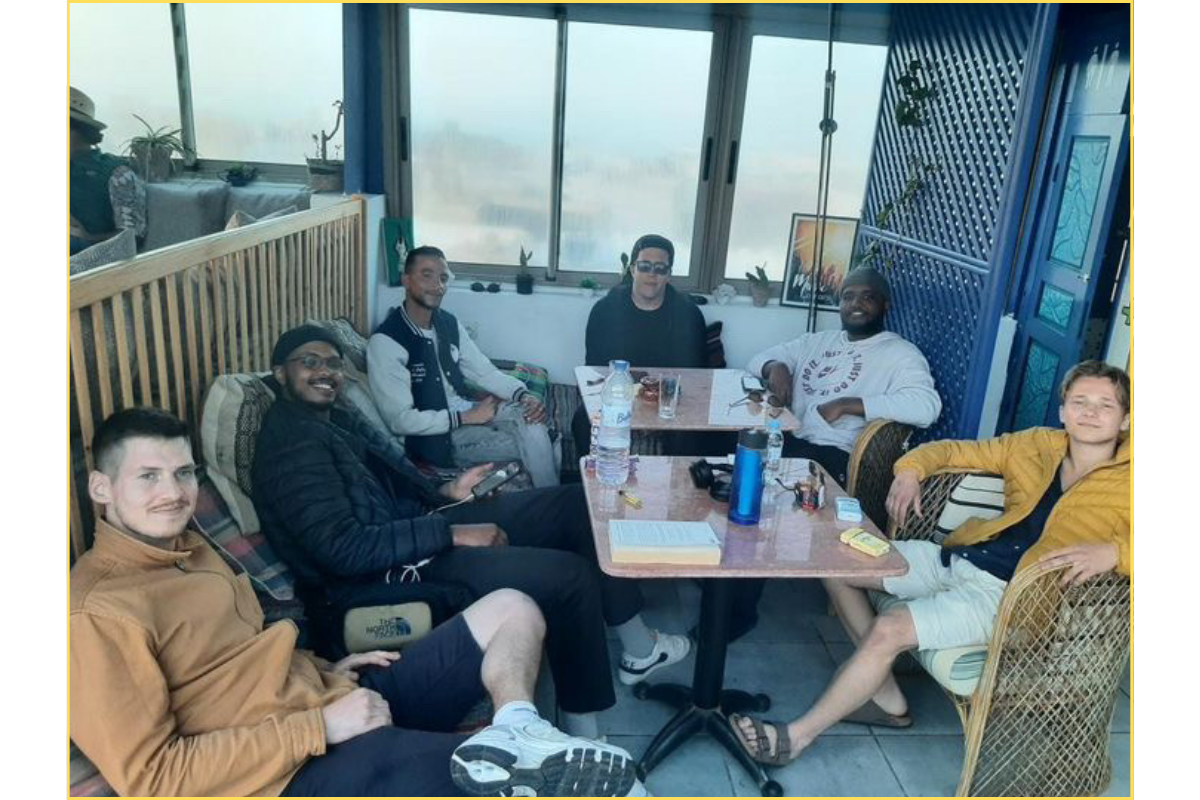
We were supposed to spend a week in Essaouira, but nobody at our hostel seemed to go anywhere. Days disappeared on the rooftop with the staff and whoever else was staying there, eating, talking, playing music and drinking endless glasses of mint tea. By the time we finally left, nearly two weeks had passed.
From there, we continued through Taghazout and Agadir before travelling south. The towns grew farther apart, development thinned out and the dry landscape began to dominate the view. After roughly six weeks, we reached Laayoune, the largest city in Moroccan-controlled Western Sahara.
Laayoune was where our plan collapsed for an embarrassing reason: food. My brother and I were picky eaters and had never adjusted to Moroccan cuisine. As we travelled south, familiar alternatives became harder to find. By Laayoune, we were barely eating and could not imagine crossing Mauritania where we expected similar cuisine and fewer other alternatives.
After a few days, we gave up on the overland journey. We checked flights to Dakar, but they cost far too much to justify. Air travel within Africa is often surprisingly expensive, and I was a broke backpacker trying to stretch the trip for as long as possible. Instead, we booked a cheaper domestic flight to Casablanca. We arrived late at night, slept for a few uncomfortable hours at a 24 hour cafe across from the train station and caught an early train north. By then, Tangier felt almost like home and, in our opinion, was easily the best city in Morocco. It was cosmopolitan, beautiful, familiar and full of people we already knew. We ended up staying there for almost two months.
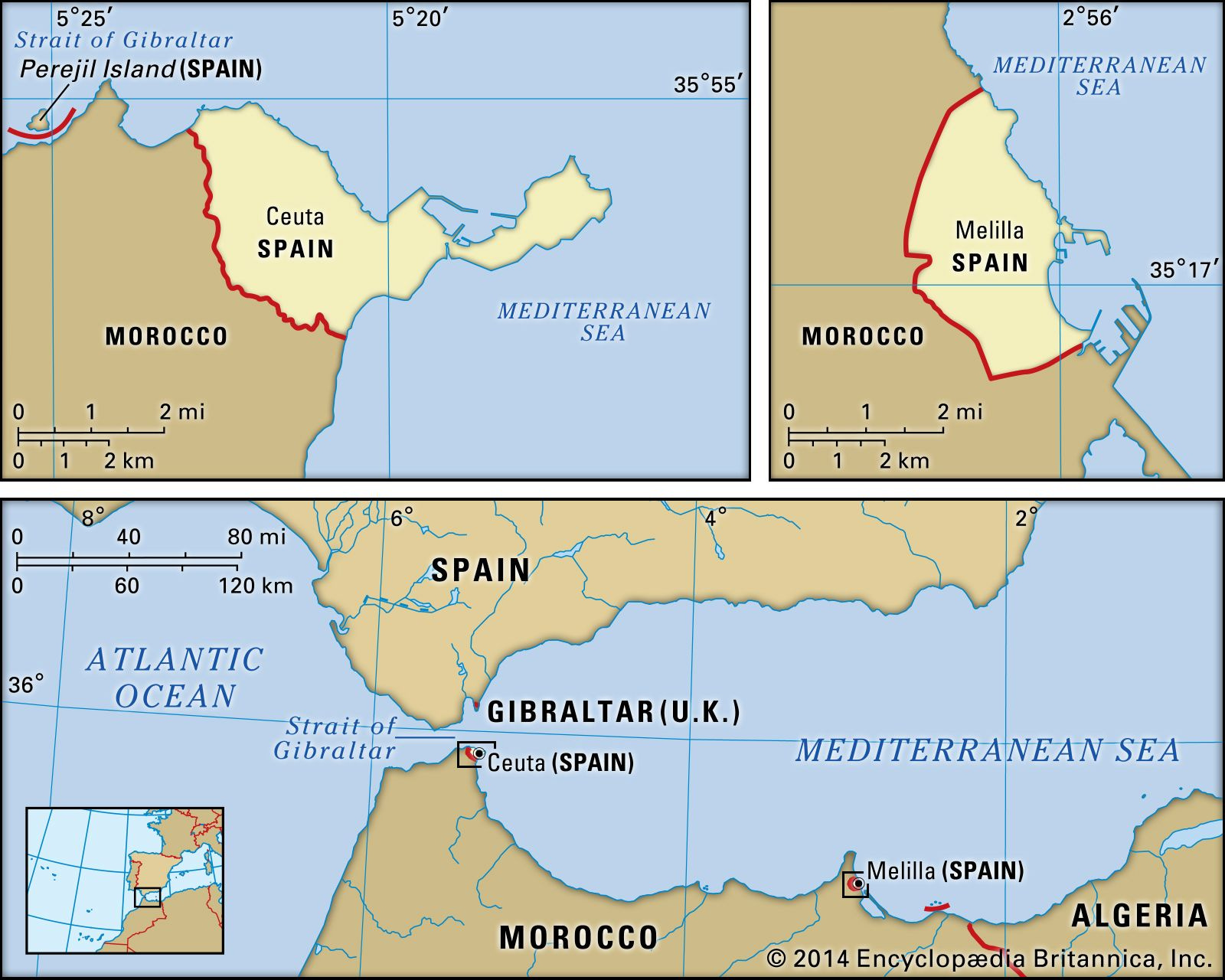
During our second stay in Tangier, we, along with some other people we met went on a day trip east along the coast to Ceuta. One was an Argentine whose main reason for going was to find yerba mate, which he eventually did. I went because I have always been fascinated by enclaves and exclaves, and Ceuta is among the strangest: a Spanish city on the African side of the Strait of Gibraltar, connected by land to Morocco but separated by sea from mainland Spain. Along with Melilla, farther east, it forms one of the European Union’s only two land borders with Africa. Spain considers both cities integral parts of the country, while Morocco claims them as its own.
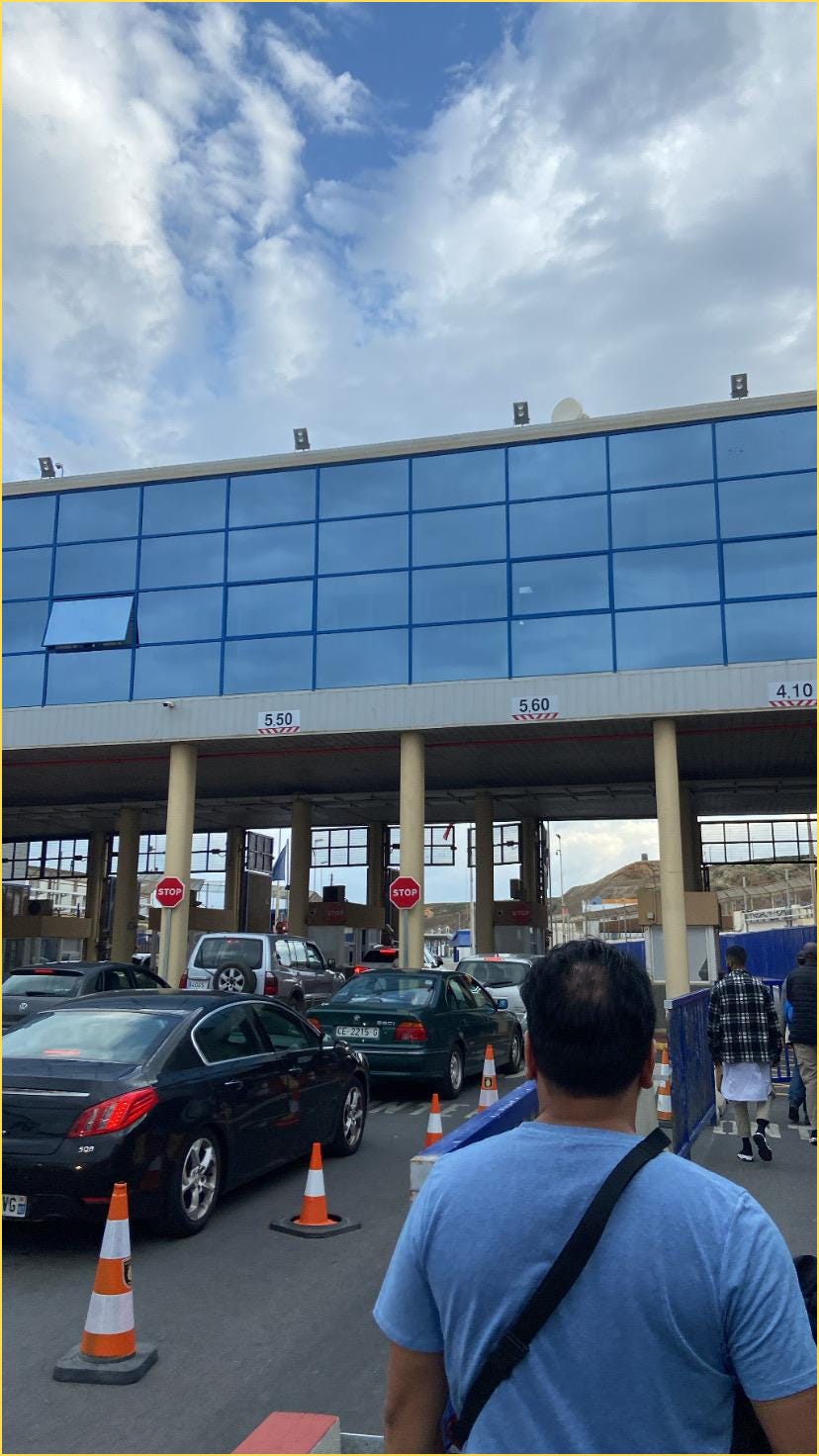
We took a taxi to the border, about an hour and a half away from Tangier. The driver dropped us outside the crossing. We joined the pedestrian line, passed through the Moroccan and Spanish checkpoints on foot and took another taxi for the short drive into Ceuta’s city center. The scale of the security was immediately obvious. Several layers of fencing separated Ceuta from Morocco, surrounded by surveillance cameras, patrol roads, checkpoints and security personnel. The Moroccan side was also closely watched by the Moroccan authorities. For decades, northern Morocco has been the final staging point for Moroccans and migrants from across West and Central Africa trying to enter Ceuta and reach Europe. After walking through that border, it was difficult to imagine a large crowd approaching unnoticed, much less crossing in significant numbers.
I thought about that border again on July 30, when the first videos began circulating of thousands of people streaming into Ceuta from Morocco. They went through the land crossing, over the barriers and around them by sea. As the day continued, the estimates became almost unbelievable. According to the highest figures, as many as 60,000 people (could be anywhere from 50,000-60,000) entered the city in approximately 24 hours. Ceuta normally has a population of around 84,000. In a single day, a movement equivalent to roughly 70 percent of the city’s population crossed one of the most closely controlled borders in Africa.
The overwhelming majority were Moroccans, mostly young men, although women, children and people of other nationalities were also present. At least 67 people died. Some drowned while trying to swim into Ceuta, while others were crushed or trampled in the crowd at the border.
Ceuta’s special border regime requires identity and document checks before passengers can travel to peninsular Spain or elsewhere in the Schengen area. Reaching the enclave therefore did not provide those who entered irregularly with a route into mainland Europe. PM Sánchez’s government deployed soldiers and additional police, began installing a floating maritime barrier and made clear that its new regularization program would not apply to them. Within 48 hours, more than 48,000 people had returned to Morocco, most officially described as returning voluntarily.


The scale was so extraordinary that calling it a migration surge conceals more than it explains. Ceuta had recorded only 2,582 irregular entries during the entire first half of 2026. Then, in a single day, perhaps 20 times that number entered the city. A movement this large could not approach one of the most controlled borders in Africa invisibly. Social media, informal networks, rumors that the frontier had opened, economic frustration and a recent Spanish court decision restricting immediate expulsions of people arriving by sea may have strengthened the belief that the border had opened, and may all have contributed. Other forms of encouragement may also have played a role. The available evidence does not yet explain precisely how tens of thousands of people assembled so quickly. It does, however, leave a separate question: why did the Moroccan state allow them to reach the border?
morocco did not simply lose control
In the days before the mass crossing, Moroccan authorities demonstrated that they were capable of policing the same coastline. On July 28, Moroccan forces intercepted more than 200 people attempting to swim into Ceuta while approximately 70 succeeded. Moroccan patrol boats operated in the water, while police and gendarmerie controlled the beaches and roads around Fnideq and Belyounech.
Morocco has also repeatedly shown that it can prevent proposed mass crossings before they begin. When calls for another rush on Ceuta circulated online in September 2024, authorities arrested organizers, deployed large numbers of security personnel and prevented crowds from reaching the fence. The state therefore possessed both the intelligence and physical capacity to detect a movement toward Ceuta.
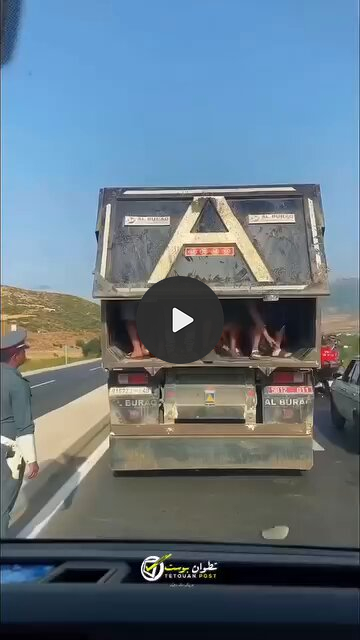
Yet on July 30, enormous groups were allowed to reach the border. Multiple participants told New York Times reporters that Moroccan officers encouraged them to proceed. Youssef Alaoui, 26, said officers pointed his group toward Ceuta while repeating, “Go that way, go that way.” He later swam across the maritime border and encountered bodies in the water. Mohammed Ahmidho, 37, said that as he approached the frontier, Moroccan officers told people, “Come to Spain.” The reporters met Ahmidho while he was returning to Morocco. There was nowhere to eat, drink or sleep in Ceuta, he said, so he was going home.
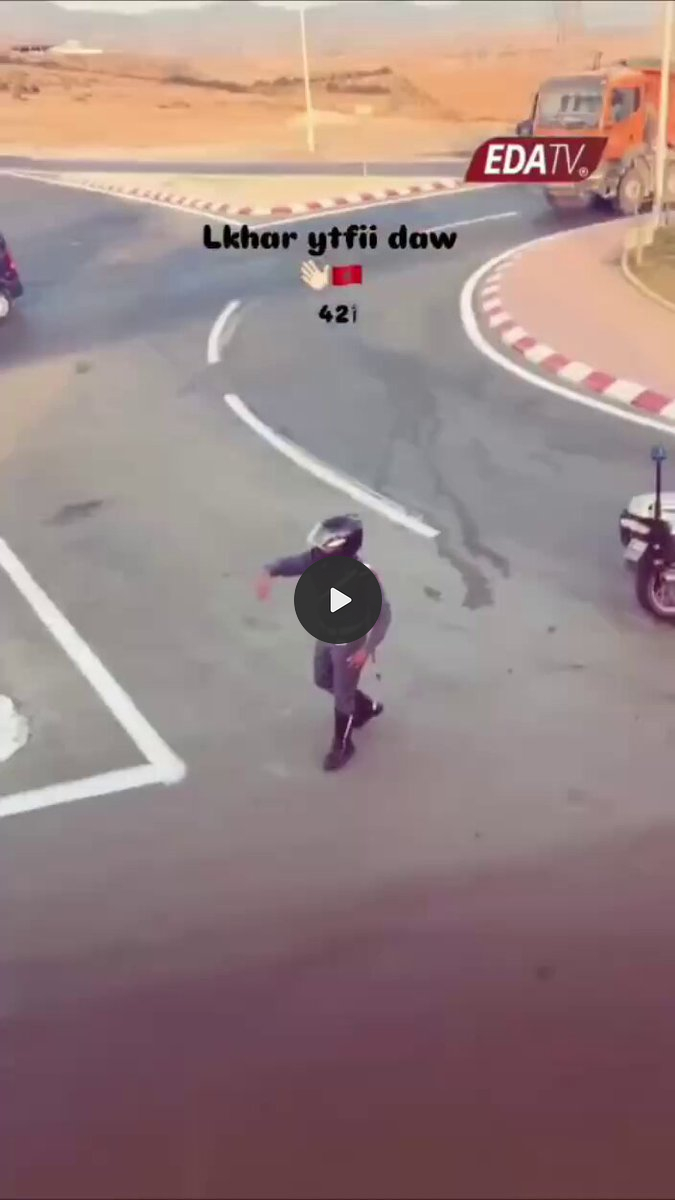
Their accounts were reinforced by several videos circulating online that appeared to show uniformed Moroccan officers guiding groups along roads toward the frontier rather than dispersing them. The footage does not reveal who issued the instructions or how far up the chain of command they originated. Taken together with the named witnesses, however, it suggests that at least some Moroccan officers were actively helping people reach Ceuta.


was opening the border a message?
Moroccan authorities later resumed enforcement. Security forces used tear gas and batons to push crowds away, while Morocco cooperated with the return of those people. That later crackdown does not disprove state involvement. It may instead explain the operation. Morocco demonstrated both sides of its power. It showed Spain what could happen when enforcement disappeared, and then showed that it could restore control when it chose. The border was secure. Then it was not. Spain was overwhelmed. Then Morocco closed it again. They were basically saying: We can stop this. We can also choose not to stop it.
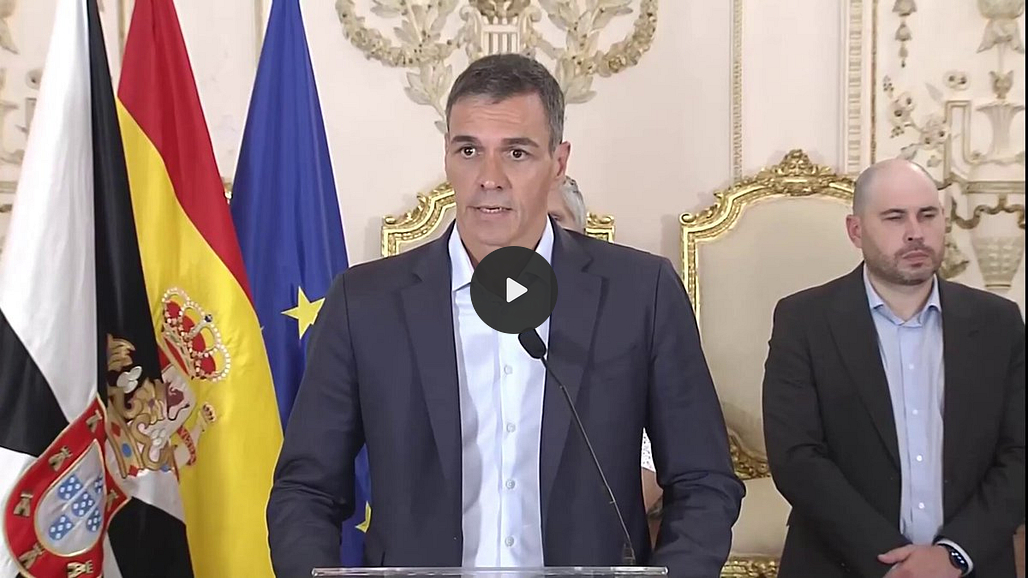
PM Pedro Sánchez described the crossing as a violation of Spain’s territorial sovereignty. He was right to treat it as more than a migration-management problem. This was not a conventional military invasion. Moroccan soldiers did not enter Ceuta at the head of an armored column, seize government buildings or formally annex the city. But tens of thousands of Moroccan civilians entered disputed Spanish-controlled territory after witnesses said Moroccan officers directed them there. That resembles another Green March.

the method was used before
Western Sahara is the large, sparsely populated territory stretching south from Morocco along the Atlantic coast. Spain colonized it in the late nineteenth century and governed it as the Spanish Sahara. Its native population, the Sahrawis, are an Arab-Berber people whose traditional communities moved across what are now Western Sahara, southern Morocco, Mauritania and Algeria.


By the 1970s, Spain was preparing to leave. The Polisario Front, founded by Sahrawi nationalists in 1973, demanded independence. Morocco claimed that Western Sahara had historically belonged to the Moroccan kingdom, while Mauritania claimed the southern part of the territory.
The dispute went before the International Court of Justice. In October 1975, the court found that some Sahrawi tribes had historical ties of allegiance to the Moroccan sultan. But it also found that these ties did not establish Moroccan sovereignty over Western Sahara or cancel the Sahrawis’ right to determine their own future. The court said the territory’s status had to be decided through “the free and genuine expression” of its people’s will. The court’s opinion can be read here. King Hassan II presented the ruling as support for Morocco’s claim and moved quickly. With Spain weakened by the illness of Francisco Franco, Hassan organized the Green March. In November 1975, approximately 350,000 Moroccan civilians advanced toward Western Sahara carrying Moroccan flags and Qurans. The marchers were unarmed, but the operation was planned and directed by the Moroccan state.
Spain had to choose between confronting a huge civilian procession or withdrawing. It chose withdrawal. Within days, Spain signed the Madrid Accords, transferring administrative control to Morocco and Mauritania without holding the referendum promised to the Sahrawis. The Polisario Front rejected the agreement and declared the Sahrawi Arab Democratic Republic. A long war followed. Mauritania abandoned its claim in 1979, after which Morocco took control of most of the territory. Morocco now controls Western Sahara’s main cities, coastline, fisheries and major phosphate deposits, while the Polisario controls a thin, sparsely populated area east of the Moroccan-built sand wall. Large numbers of Sahrawis continue to live in refugee camps around Tindouf in Algeria.
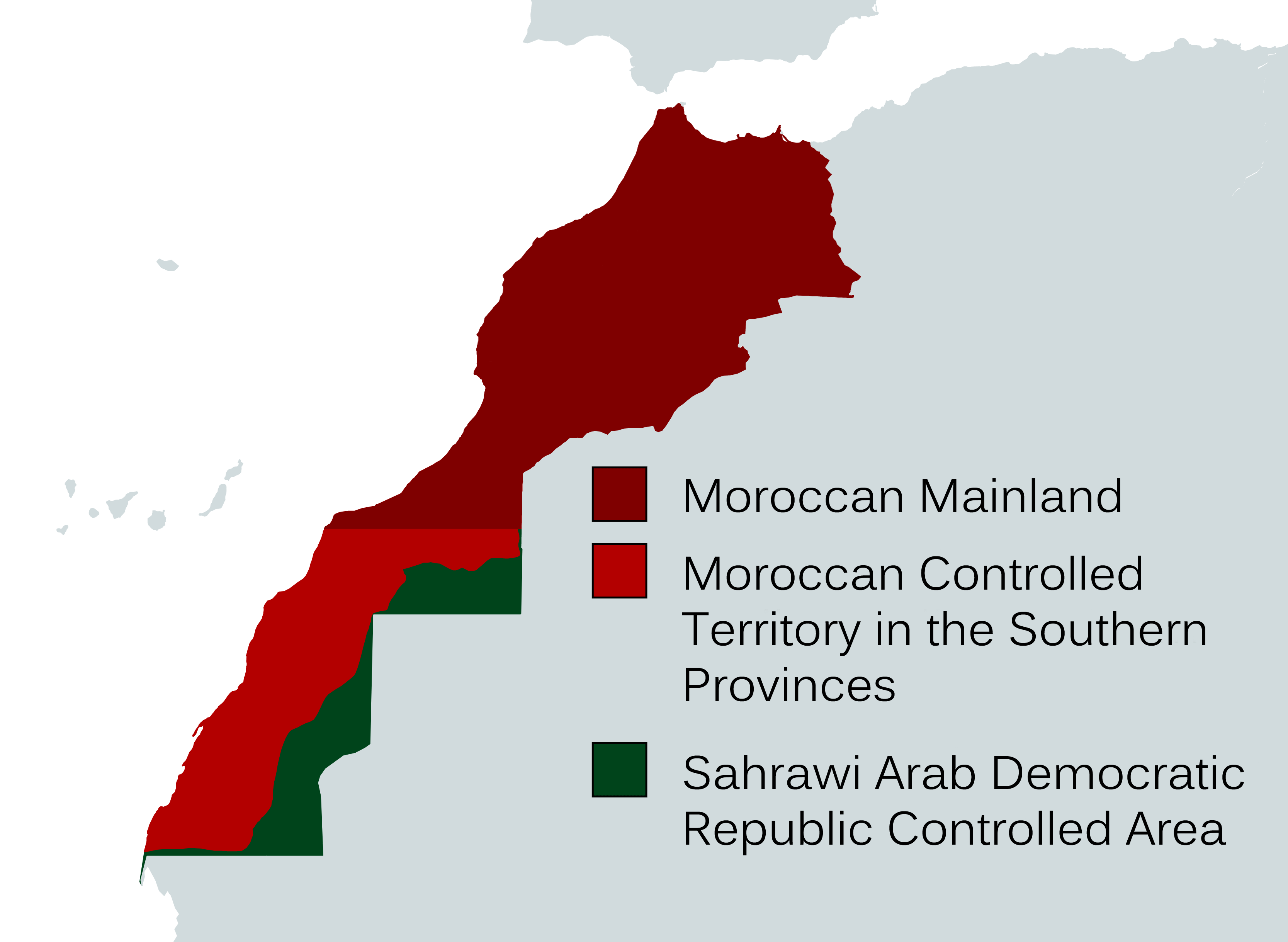
Morocco considers Western Sahara part of its national territory and has made recognition of its sovereignty there a central aim of its foreign policy. The region also gives Morocco a long Atlantic coastline, valuable fishing grounds, phosphate reserves and a strategic route toward Mauritania and West Africa. The United Nations, however, still lists Western Sahara as a non-self-governing territory, and the referendum intended to settle its future has never taken place.
What happened in Ceuta was not identical to the 1975 Green March. Morocco did not officially organize the crowd keyword: officially, distribute flags or announce an attempt to annex the city. The vast majority of the people who crossed were simply trying to escape unemployment and reach Europe. But the similarity lies in the method, a huge civilian movement crossed into territory controlled by Spain while Morocco avoided sending its military openly across the border. Spain was left trying to contain tens of thousands of civilians rather than repel an invading army. The comparison becomes harder to ignore because, four months before the crossing, Michael Rubin had explicitly called on Morocco to organize a new Green March into Ceuta and Melilla.
The blueprint was published in washington
Rubin is not a member of the Trump administration, but he is not a detached commentator either. From 2002 to 2004, during the George W. Bush administration, he served as a Pentagon staff adviser on Iran and Iraq in the Office of the Secretary of Defense. After the invasion, he was sent to Baghdad as a political adviser to the Coalition Provisional Authority, which was the American occupation government that ruled Iraq until June 2004. He later spent two decades at the American Enterprise Institute before becoming director of policy analysis at the Middle East Forum. His career places him firmly within Washington’s neoconservative foreign-policy establishment and the broader network that moves between different administrations, think tanks and pro-Israel advocacy organizations.
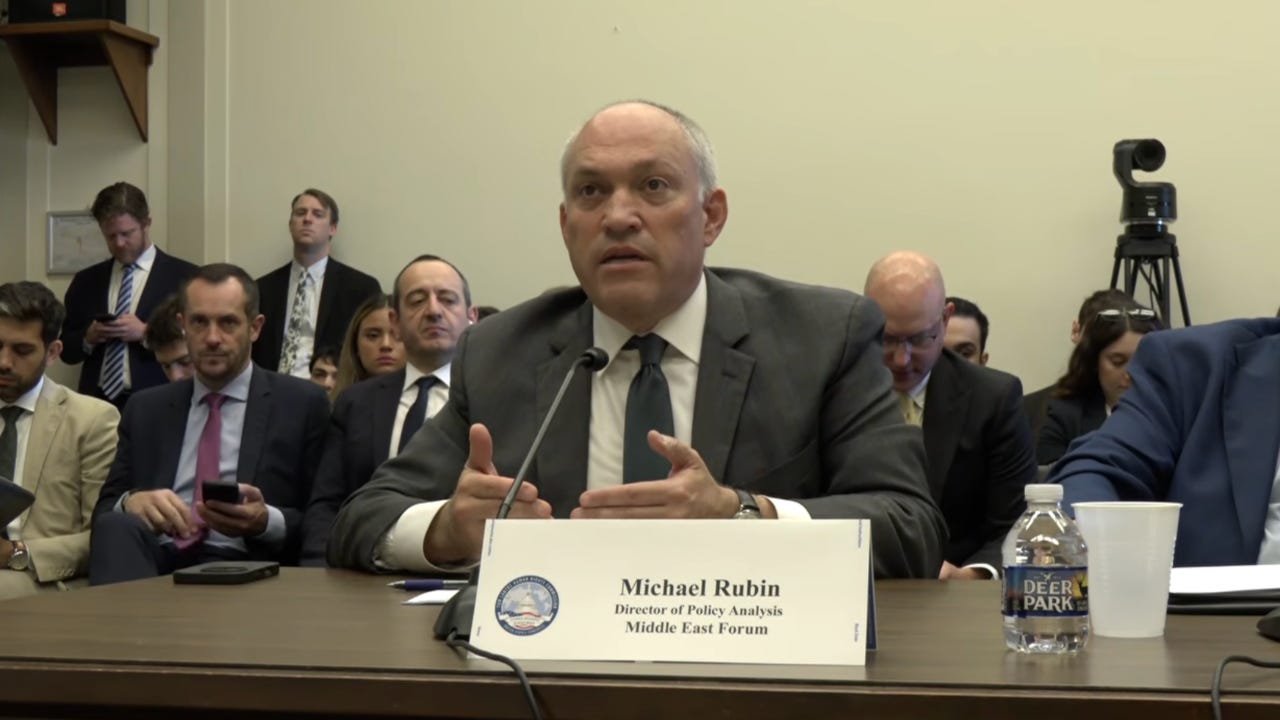
Rubin has spent decades calling for American intervention in other countries’ political and territorial affairs. Depending on the target, he has advocated military action, sanctions, regime change, support for armed opposition or recognition of separatist territories. His proposals have concerned Iraq, Syria, Libya, Lebanon, Egypt, Somalia, Sudan, Eritrea, Ethiopia, Algeria, Tunisia, Yemen, Pakistan, Qatar, Iran and Russia and I feel like i am still definitely missing someone!
More recently, Rubin has increasingly focused his attention on Turkey and Spain. He has repeatedly discussed Turkey’s possible collapse, supported greater international backing for Kurdish separatism and argued that the country may eventually be partitioned.
The countries and immediate justifications change, but the pattern remains consistent. Rubin treats military force, sanctions, political destabilization and territorial fragmentation not only as acceptable but the only tools for reshaping governments he considers hostile to American and Israeli interests. Many of the countries he targeted later experienced the wars, foreign interventions or fragmentation he advocated. His proposal for a new Green March into Ceuta and Melilla should be understood within that wider record.
On March 12, Rubin, published an article titled “Madrid Bashes Israel, but Spain Is the Colonial Power”. The article appeared one day after Sánchez announced the permanent recall of Spain’s ambassador to Israel. Rubin accused Sánchez of using Israel as a political enemy and argued that Spain was turning against both Israel and the United States. He then called on Trump and Secretary of State Marco Rubio to retaliate by recognizing Ceuta and Melilla as Moroccan territory under Spanish occupation.
Four days later, Rubin published a second article explaining how Morocco could take them. In “Morocco Should Send a New Green March into Ceuta and Melilla”, Rubin told Mohammed VI to repeat his father’s 1975 strategy. He proposed gathering Moroccan civilians at the border, using bulldozers to open the way and sending people into Ceuta and Melilla without weapons to raise the Moroccan flag. Rubin also imagined Moroccan forces entering afterward to “restore order” and forcing the cities’ Spanish residents across the Strait. He argued that NATO would not be required to defend Ceuta or Melilla because both fall outside the geographical area covered by the alliance’s mutual-defense guarantee.
It was essentially a proposal for Morocco to take the cities through a civilian invasion, and four months later, as many as 60,000 overwhelmingly Moroccan civilians entered Ceuta, while witnesses alleged that Moroccan police pointed them toward Spain. The operation did not follow every part of Rubin’s proposal. There were no bulldozers destroying the fences. The crowd did not occupy government buildings or raise the Moroccan flag. Moroccan forces did not formally enter Ceuta to remove its residents. But Morocco appears to have demonstrated the central mechanism Rubin described: a mass, nominally civilian incursion capable of overwhelming the city while leaving Spain unable to respond as it would to a military attack.
washington was already discussing ceuta
A little over two weeks after Rubin proposed a new Green March, Republican congressman Mario Díaz-Balart publicly questioned Spanish sovereignty over Ceuta and Melilla. In an interview published on April 1, Díaz-Balart said that the cities were located on Moroccan territory and that their future should be negotiated among allies. He praised Morocco as a reliable American partner while accusing Sánchez of damaging relations with Washington.
Díaz-Balart has a longstanding relationship with Morocco. He previously co-chaired the Congressional Morocco Caucus and has advocated for Rabat in Congress for more than fifteen years. In 2011, he publicly claimed credit for securing increased American funding for the kingdom. Employees of the Moroccan American Center for Policy, an organization financed almost entirely by the Moroccan government and registered to represent its interests in Washington, also made individual contributions to his campaign and between 2012 and 2017, They paid Díaz-Balart brother’s consulting firm $20,000 a month, approximately $1.2 million in total, to “positively affect relations between Morocco and the United States.” Their contract prohibited Lincoln from lobbying his brother or his staff directly, but government-accountability experts interviewed by CBS said the arrangement nevertheless created the appearance of a serious conflict of interest. Those documented payments ended 5 years before Díaz-Balart assumed control of the appropriations subcommittee in 2023, but he remains one of Morocco’s most consistent advocates in Congress.
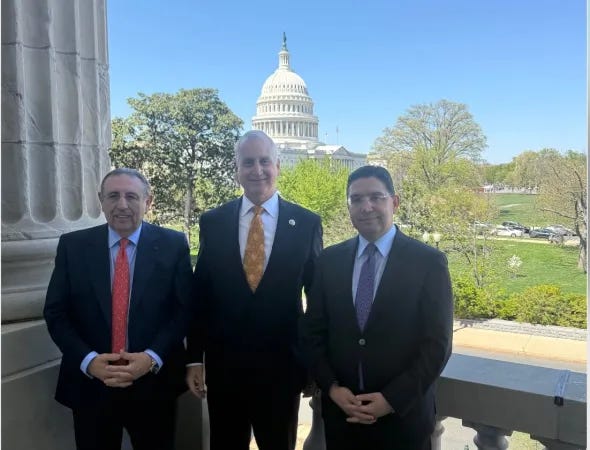
As chairman of the House appropriations subcommittee responsible for the State Department and foreign assistance, he helped produce successive spending proposals supporting Morocco. In April 2025, he met Moroccan Foreign Minister Nasser Bourita in Washington, praised Mohammed VI’s leadership and described Morocco as an essential American ally. Three months later, his subcommittee released its fiscal year 2026 bill, recommending at least $40 million for Morocco. $20 million in security assistance and another $20 million in foreign military financing. This was $10 million more than what was allocated in his first spending bill as chairman in 2023.
He is also a longtime political ally and close personal friend of Secretary of State Marco Rubio. The two served together in the Florida legislature before entering Congress, and Díaz-Balart has described Rubio as a “dear and close friend.” Their positions now intersect directly: Rubio leads the State Department, while Díaz-Balart chairs the House subcommittee that determines much of its funding.
On July 15, the House passed Díaz-Balart’s fiscal year 2027 appropriations bill by 217 votes to 209. The $40 million allocated to Morocco was unchanged from the previous year. The more significant development appeared in the report accompanying the bill. It described Ceuta and Melilla as Spanish-administered cities “located in Moroccan territory” and encouraged the State Department to promote negotiations between Spain and Morocco over their future status.
This was not a law, and it did not change the American government’s formal position that the cities belong to Spain. It did show that members of Congress were now questioning Spanish sovereignty and asking the Trump administration to become involved. An argument Rubin had made on a think-tank website was now appearing in an official congressional document.
Then Trump joined the pressure campaign. On July 1, Trump warned that the Spanish was “not behaving nicely” and would “learn.” Speaking immediately after celebrating Theodore Roosevelt and the American defeat of Spain in 1898, he recalled how Spain relinquished Cuba, Puerto Rico, Guam and the Philippines, adding: “We got them all.”
By July, the argument had travelled considerably further than Rubin’s articles. Everything unfolded within a remarkably short period. Rubin first called for Washington to recognize Ceuta and Melilla as occupied Moroccan territory, then urged Morocco four days later to launch a new Green March. Díaz-Balart soon questioned Spanish sovereignty over the cities, and the committee he leads called for negotiations over their future. Trump then warned that Spain would “learn soon” while invoking its territorial defeat in 1898. The House passed the appropriations bill on July 15. Fifteen days later, tens of thousands of Moroccans entered Ceuta.
ALSO: Four days before the Ceuta crossing, Trump announced that Morocco was naming the 1,055-kilometre Tiznit–Dakhla expressway after him. The road passes through Moroccan-controlled Western Sahara, making the gesture more than simple flattery because it attached Trump’s name to the territory whose Moroccan annexation he had recognized. Rabat understood its audience. Trump likes enormous projects, personal tributes and having his name displayed on things, and Morocco offered him all three.


why now?
The simplest answer is that two disputes came together at the same time. Only ten days before the crossing, Pedro Sánchez travelled to Algiers and described Algeria as a “strategic partner” and “friendly nation.” Spain and Algeria announced closer cooperation on energy, migration, counterterrorism, industry and political dialogue. The Spanish government presented the visit as the beginning of a new phase in the relationship.
This was probably not good news to Morocco because Algeria is its main regional enemy. The two countries are effectively in a cold war. Their land border has been closed since 1994. Algeria severed diplomatic relations in 2021, closed its airspace to Moroccan aircraft and stopped sending gas through the pipeline that crossed Morocco into Spain. Both countries have increased military spending and compete for influence across North Africa, the Sahel, Europe and the African Union.
The central dispute between the two countries remains Western Sahara. Morocco claims the former Spanish colony as part of the kingdom and controls most of it. Algeria supports the Polisario Front, whose leadership is based around the Sahrawi refugee camps near Tindouf. Rabat considers this support an attempt to weaken and contain Morocco. Algiers views Moroccan control of Western Sahara as an occupation and the kingdom’s growing military power as a threat.
Algerian fears of Moroccan expansion did not begin with Western Sahara. After Algeria gained independence, Moroccan nationalists continued to claim Tindouf and Béchar as parts of “Greater Morocco.” Morocco attempted to seize the territories during the 1963 Sand War. Rabat had also aligned itself with the United States and France, while its secret military and intelligence relationship with Israel began during the same period and included assistance against Algeria. That history still shapes the arms race between them. Algeria allocated approximately $25 billion to defense this year, the largest military budget in Africa. Morocco spends considerably less, but it has long received weapons, intelligence, training and political support from the United States, France and Israel, who has deepened this divide.
Algeria does not recognize Israel and remains one of the Arab governments most firmly opposed to normalization. It strongly supports the Palestinians and often presents Palestine and Western Sahara as parallel anti-colonial causes. Algeria also maintains relations with Iran and Russia, two countries now directly opposed to Israel and the United States.
Morocco has gone in the opposite direction. Its cooperation with Israel existed quietly for decades, but the relationship became official in 2020. Morocco agreed to normalize relations with Israel, and the Trump administration recognized Moroccan sovereignty over Western Sahara. The exchange was that Israel gained another Arab partner, while Morocco received American support on the issue most important to the palace.
A revealing piece of context: read this Times of Israel article on how Hassan II secretly passed Arab military discussions to Israeli intelligence before the 1967 war.
The relationship quickly became military. In November 2021, Israel and Morocco signed a defense agreement covering intelligence, training, military industry and future arms sales. Morocco has since acquired Israeli drones, counter-drone equipment, radar, the Barak MX air-and-missile-defense system and a billion-dollar Israeli surveillance satellite.
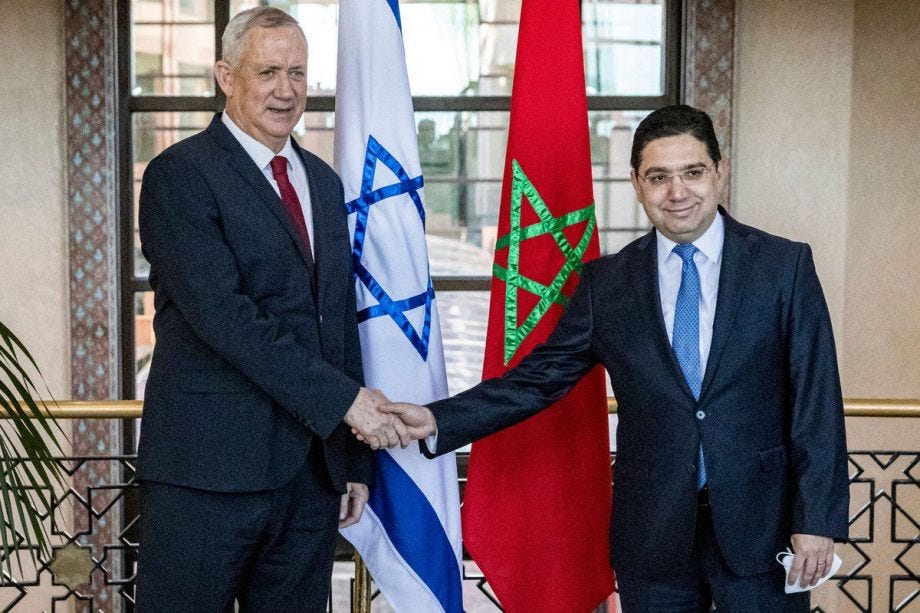
The relationship now extends beyond arms sales. BlueBird Aero Systems, partly owned by the state-owned Israel Aerospace Industries, opened a production facility in Benslimane, near Casablanca, in November 2025 to manufacture SpyX loitering munitions. Moroccan technicians reportedly received training at BlueBird’s facilities in Israel and are being trained to assemble, integrate and maintain the weapons locally as part of a technology-transfer program. Elbit Systems also announced plans in 2023 to establish two production sites in Morocco, including one near Casablanca, although their current status remains unclear.
Israel does not transfer military technology and weapons-production capacity to states it considers unreliable or politically independent of its strategic direction. It is helping build Morocco’s domestic arms industry because it views the kingdom as a dependable long-term partner. Israel recognized Moroccan sovereignty over Western Sahara in 2023. Morocco therefore has become Israel’s closest military partner in North Africa, and Israel has become one of the strongest international supporters of Morocco’s territorial ambitions.
Algeria sees the growing Israeli military presence in Morocco as a direct threat. Israeli drones, radars, surveillance systems and intelligence networks give Algeria’s main regional rival new ways to monitor its territory and weaken its defenses. The systems are also being built into a military already equipped and trained by the United States. Morocco operates American F-16s, Abrams tanks, air-defense equipment and communications systems. Shared data links and compatible command networks allow sensors, aircraft and weapons from all three countries to exchange information. A radar can detect a target, pass its location to a command center and direct an aircraft, missile battery or drone to attack it.
This interoperability is more important than the number of individual weapons. Morocco is being prepared to operate as part of a wider American-Israeli military network. Its forces train regularly with the American and Israeli troops through exercises such as African Lion. During a regional war, the three countries would not have to build a combined system from the beginning. Much of the technical and institutional integration would already exist.
Israeli technology could help Morocco track Algerian troop movements, collect electronic signals and map military installations across the closed border. Armed drones and loitering munitions would give Morocco the ability to strike radar stations, command centers and mobile units from a distance. The Barak MX system would protect Moroccan territory against Algerian aircraft, missiles and drones, making retaliation more difficult.
Local production deepens the threat. Morocco is developing the capacity to assemble, maintain and repair Israeli-designed weapons inside the country, meaning it could continue operating these systems during a prolonged crisis and build its own reserves without waiting for every replacement or munition to arrive from Israel.
The intelligence relationship may be even more concerning. Morocco has purchased a billion-dollar Israeli surveillance satellite and reportedly used Pegasus spyware against Algerian and Spanish officials. Its territory also offers the CIA and Mossad a potential base for intelligence operations against Algeria. Algeria has even accused Rabat of sending Israeli agents into the country using Moroccan passports. Israeli assistance could give Morocco a much clearer picture of Algeria’s military structure, communications and internal political divisions. Intelligence gathered during peacetime could later be used to identify targets in a war.
A wider confrontation could leave Algeria facing threats from several directions. Morocco would place pressure on the western border. American and Israeli aircraft or naval forces could operate from the north. Armed groups and unstable states across the Sahel would create additional pressure in the south and east. Algeria’s enormous territory would force its military to defend long borders, energy infrastructure, coastal cities and installations deep inside the country at the same time.
The destruction of Libya remains central to Algerian thinking. Algiers watched NATO use air power, intelligence, sanctions and local armed groups to overthrow a neighboring government and leave the country fragmented. Algeria’s leaders understand that a campaign against them would probably begin with political isolation, surveillance, covert activity and pressure on internal divisions before any large military attack. Israeli factories and intelligence systems in Morocco create infrastructure that could support such a campaign. Every drone production line, radar installation, spying technology and joint exercise improves Morocco’s position today while increasing the danger to Algeria in a future regional war.
sánchez was improving relations with morocco’s biggest enemy…
and with the North African government most strongly opposed to Israel.
At the same time, Prime Minister Pedro Sánchez had become one of Israel’s sharpest critics in Europe. Spain recognized Palestine, accused Israel of genocide in Gaza, restricted military cooperation and refused to support the expansion of the war with Iran. Madrid also denied the United States access to Spanish bases and airspace for attacks on Iran. This was the confrontation behind Trump’s warning that Spain was “not behaving nicely” and would “learn soon”.
Ceuta is also important because of its location. Spain controls the northern shore of the Strait of Gibraltar, while Ceuta gives it territory and thus territorial water on the African side. Ships can avoid the British territorial waters around Gibraltar and the territorial waters claimed by Morocco, but under the existing maritime boundaries they cannot pass through the strait without entering territorial waters claimed by Spain.
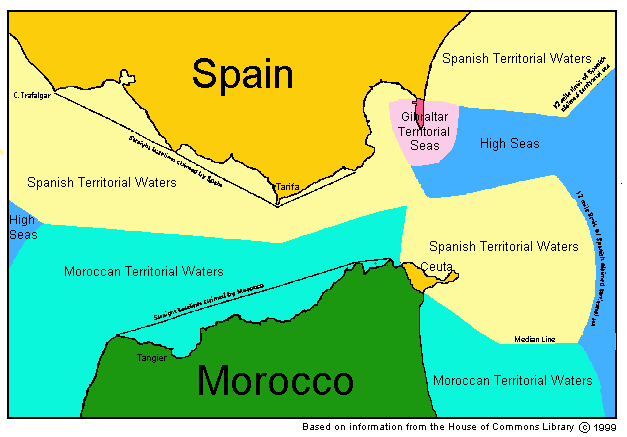
That gives Spain a strong position over the western entrance to the Mediterranean and helps Spain dominate one of the world’s most important shipping routes. This is relevant because now that Iran has severely restricted traffic through Hormuz and the Houthis have made Bab el-Mandeb dangerous for Israeli-linked shipping. Gibraltar is Israel’s only reliable maritime route to the open ocean, as well as the main passage for American and European warships, weapons and supplies entering the Mediterranean from the Atlantic.
If Morocco controlled Cueta, the entire southern side of the passage would belong to a country closely aligned with Israel and the United States. Spain is unlikely to close the strait, but its support for Palestine creates a risk that Israel would not face under Moroccan control.
an interesting detail
In May 2019, Yair Netanyahu called on Arabs and Muslims to begin “liberating” Islamic territory with Ceuta and Melilla. Santiago Abascal, leader of the far-right VOX party, personally objected, provoking a public argument in which Netanyahu repeatedly equated Spain’s North African territories with the Israeli-occupied West Bank. Abascal therefore knew exactly what influential figures within Israel were saying about Spanish sovereignty. Yet, to this day, Abascal continues to subordinate both himself and his party to Israel, presenting VOX as one of its most obedient allies in Spain.


Even after American and Israeli figures questioned Spanish sovereignty over Ceuta and Melilla, and tens of thousands of people suddenly crossed into Ceuta. Neither VOX nor Abascal has confronted the Israeli and American figures who helped place Spanish sovereignty in question or acknowledged Israel’s influence within the American or Moroccan political systems. If they were actual nationalists in any meaningful sense, if they placed Spain above every foreign alliance, they would have directed at least some of their anger toward the very obvious powerful foreign interests encouraging Morocco. Rather than just blaming only Sánchez and the people sent across the border. Anyone who still imagines VOX to be an independent, pro-Spanish opposition should ask why it so openly serves the very foreign interests challenging Spain’s sovereignty.
morocco had done it before
The clearest precedent came in May 2021. Spain allowed Brahim Ghali, leader of the Polisario Front, to enter the country for medical treatment after he became seriously ill with Covid-19. Rabat was furious. Morocco considers the Polisario a separatist threat and treats foreign engagement with its leaders as a challenge to its claim over Western Sahara. Ghali was registered at the hospital under a fake name, although Spain maintained that he had entered the country on a valid Algerian passport bearing his real identity.
Shortly afterward, Moroccan forces stopped enforcing the border around Ceuta. Around 8,000 people crossed into the city over two days, many by walking around the border fence at low tide or swimming from nearby beaches. A large number were Moroccan citizens, including roughly 1,500 minors. Spain sent soldiers into the streets and began returning people across the border.
Morocco denied using the crossing to punish Spain, but its own officials openly linked the crisis to Ghali’s presence. Once the diplomatic confrontation eased, Moroccan enforcement returned. The scale in 2026 was far greater, but the basic tactic was already familiar.
why were tens of thousands of people to leave?
at a moment’s notice, without time to pack or plan, carrying little more than the clothes they were wearing?
Morocco’s economic progress is visible. The country has built ports, motorways and high-speed rail, attracted automotive and aerospace manufacturers and developed a massive tourism industry. When my brother and I travelled from Casablanca back to Tangier, we took Al Boraq, Africa’s first high-speed train. It was fast, modern and more impressive than any train I had taken in the United States.
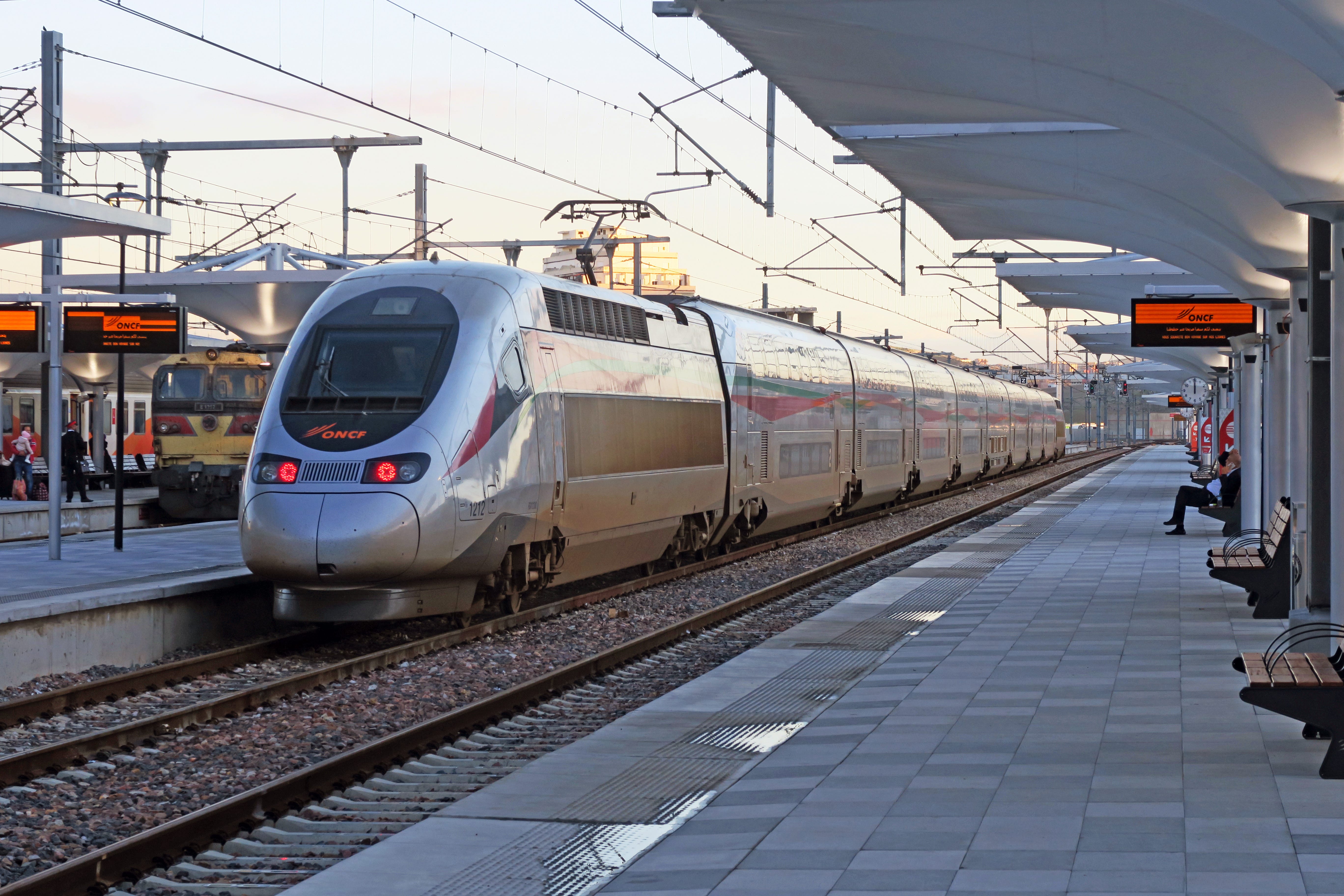
That impression extended beyond the train. Morocco’s major cities had modern stations, extensive construction and busy commercial districts. From a visitor’s perspective, the country appeared well connected and in the middle of a significant physical transformation.
The desire to emigrate was understandable though. Morocco, after all, is still a middle-income country. What’s shocking is that tens of thousands were prepared to leave under such desperate and degrading conditions by rushing a militarized border without food, shelter or any guarantee that they would reach mainland Europe. Poverty alone cannot explain that level of desperation. People endure hardship when they believe their lives are improving and that a decent future remains possible at home. The scale and recklessness of the crossing suggested that many Moroccans did not believe that.

The modern Morocco I encountered was real, but it was not equally available to everyone. Behind that polished surface was another country of bad public schools, overcrowded dirty hospitals, poorly paid work and widespread economic insecurity. Morocco had become highly effective at building what tourists and investors could see while neglecting much of what ordinary people needed to live securely.
According to Morocco’s statistics agency, 37.2 percent of labor-market participants between 15 and 24 were unemployed in 2025. Among those between 25 and 34, the rate remained 20.9 percent. These figures counted only people actively seeking work, excluding those who had stopped searching or never entered the labor market. The IMF reported that 25.2 percent of Moroccans between 15 and 24 were neither employed nor enrolled in education or training during the third quarter of 2025.
Education offered little protection. Unemployment among people with diplomas stood at 19.1 percent. Finding work did not necessarily provide security or a path upward either. Nearly 1.2 million employed Moroccans were underemployed last year: 617,000 lacked sufficient working hours, while another 573,000 earned inadequate incomes or held jobs poorly matched to their qualifications.
Only 54 percent of salaried employees had any form of employment contract, including 11 percent whose agreement was merely verbal. Many workers therefore faced low incomes, little security and limited opportunities to develop their skills or advance. Together, the 2.81 million Moroccans who were either unemployed or underemployed represented approximately 22.5 percent of the country’s labor force in 2025. And that is if you believe the official numbers, the reality is probably much worse.
These conditions did not result from an economy in recession. They persisted while Morocco was supposedly booming. The economy grew by an estimated 4.9 percent last year, its strongest performance in a decade. Tourism was breaking records, foreign investment was rising, automotive production was expanding and enormous sums were being spent on infrastructure and preparations for the 2030 World Cup. Yet for the average Moroccan, conditions remained difficult and much of that growth never reached them.
Even very skilled workers confronted the limits of Morocco’s economy. At a cafe, I met a young software engineer who told me that he had worked on ATM software for Bank of Africa, one of the country’s largest banks. He earned around $2,000 a month, which is a pretty good salary by Moroccan standards and enough to live comfortably, although rising housing and living costs in Morocco’s major cities reduced its value. His situation was not one of poverty. It illustrated the ceiling facing even some of the country’s most successful young professionals. Bank of Africa operates across 32 countries and holds approximately $47.4 billion in assets. Its owner, Othman Benjelloun, is technically, keyword: technically, Morocco’s richest man, yet an engineer working on critical systems for the institution earned around $24,000 a year. The same skills could command several times that amount in Europe or North America. For educated young Moroccans, emigration therefore offered the only way of being paid closer to the international value of work they were already capable of doing.
You can see a visible expression of Morocco’s employment problem simply by walking through its cities. Groups of young men spend hours outside in cafes, leaning against walls or gathering on the same street corners. They are not homeless or destitute. They simply seem to have nowhere they need to be, so they just hang out and pass the time. Some come from reasonably comfortable middle-class families that can provide them with housing, food and occasional spending money. They are far from actual poverty, yet education does not guarantee employment, wages remain low and advancement can depend as much on family connections as ability. Their families may be able to support them, but they cannot offer them independence, a meaningful career or confidence that their lives will improve. Europe appears to offer the forward movement they struggle to find at home.
Europe is also a familiar and highly visible part of Moroccan life. Millions of Moroccans live in France, Belgium, the Netherlands and Spain, and many remain closely connected to the country. Some return several times a year or spend months in Morocco, particularly during the summer. Retirees may divide their time between both continents, while families send children to spend school holidays with grandparents and relatives. Many use their European incomes to establish a more comfortable life in Morocco. They buy apartments, build family homes, purchase land or invest in small businesses. The European salary can stretch much further in Morocco, allowing people who live ordinary working-class lives abroad to appear comparatively wealthy when they return. Others save for months before visiting, they rent expensive cars and spend several weeks buying gifts, eating out and displaying a standard of living they may not maintain in Europe. Moroccans at home therefore see both genuine examples of migration producing financial security and more carefully staged displays of success.
The influence of this diaspora is visible even in Morocco’s national football team. Morocco has invested heavily in football academies, training facilities and stadiums, but many of the players behind its transformation into one of the world’s strongest national teams developed abroad. Fourteen of its 26 players at the 2022 World Cup were born outside Morocco. By the 2026 World Cup, that number had risen to 19, meaning just seven players of the Morocco squad was born in the country. In its opening match against Brazil, Morocco became the first team in World Cup history to field eleven foreign-born players simultaneously.
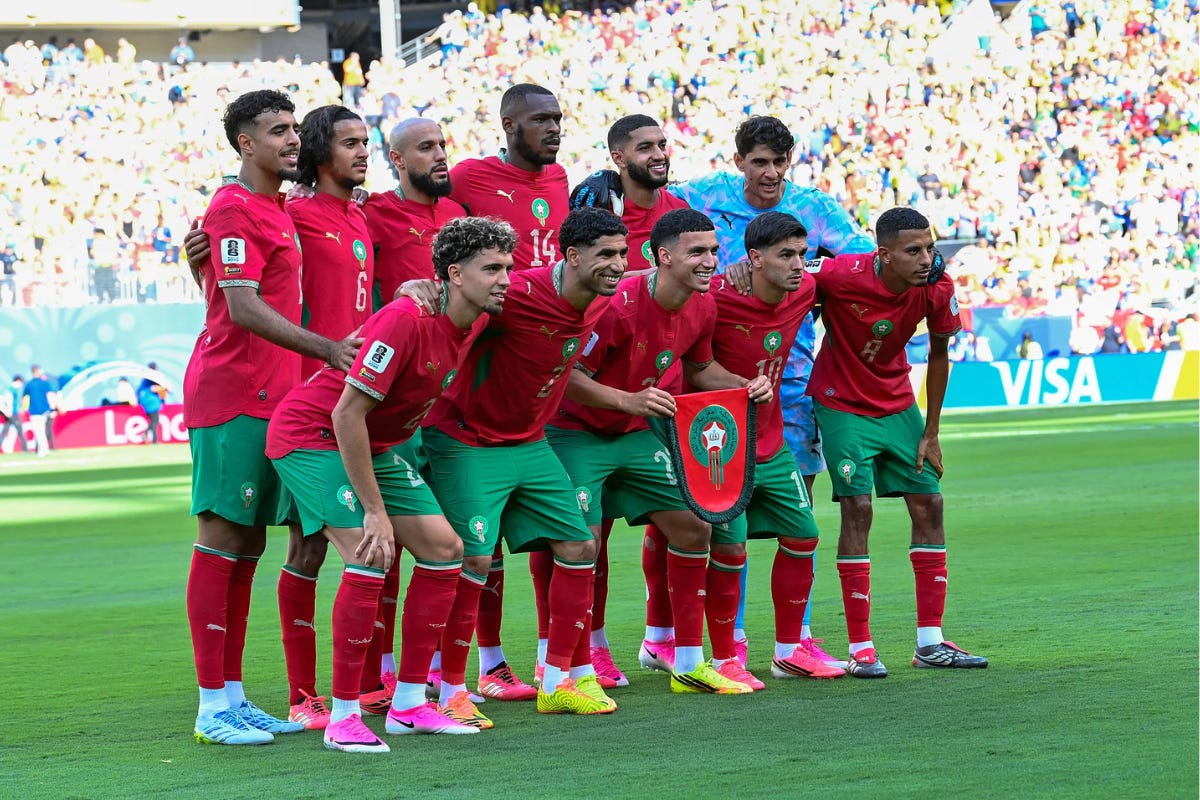
Morocco turned its enormous European diaspora into a competitive advantage by persuading players trained in richer and more advanced football systems to represent their parent’s country. The result inspired enormous national pride, yet it also reinforced a familiar lesson for young Moroccans that some of the country’s most celebrated people reached their potential only after gaining access to opportunities abroad.
This dynamic exists across the developing world. Diaspora communities return to visit relatives, send money, represent or invest in their countries of origin. Europe is so close that Moroccans are constantly reminded of the difference. Cheap flights and ferries allow emigrants to return regularly, repeatedly bringing the purchasing power of European wages into communities where incomes are much lower. Even young Moroccans who are terminally online and fully aware that life in Europe can involve difficult work, discrimination and financial insecurity can still see that it offers greater opportunity and independence than they have at home.
Emigration also serves as a pressure valve for the monarchy. Every young person who leaves is one fewer person competing for scarce work or demanding that the government provide a better future at home. Those who find employment abroad then send money back to their families thus supporting household consumption and supplying Morocco with foreign currency. Moroccans living abroad transferred approximately 122 billion dirhams into the country last year, which is around $13.1 billion and equivalent to just over 7 percent of Morocco’s GDP. The state therefore has little incentive to address the conditions driving young people away so long as their departure reduces domestic pressure and while their remittances support millions of households that the government might otherwise have to support itself.
morocco’s employment crisis cannot be separated from the way the country is governed.
Morocco holds elections and has political parties, a parliament and an elected government, but ultimate authority remains with the palace. Mohammed VI presides over the Council of Ministers, commands the armed forces, exercises religious authority as “Commander of the Faithful” and controls the most sensitive areas of government, including security, foreign policy and senior state appointments.
Much of the country is governed through what Moroccans call the Makhzen: the palace and the network of royal advisers, security officials, senior bureaucrats and powerful business families surrounding it. Elected politicians administer the state, but the palace defines their boundaries and retains control over the decisions that matter most. That concentration of power has not produced an especially energetic or publicly engaged monarch. Mohammed VI has spent extended periods abroad, particularly in France, and has frequently disappeared from public view. His absences have become politically significant because so many decisions formally depend upon him. Senior officials often avoid acting without clear royal approval, causing parts of the state to slow or stop whenever the king is unavailable.
His health has also become a persistent source of uncertainty. The palace has acknowledged operations for a recurring heart-rhythm disorder in 2018 and 2020, while a fractured shoulder required further surgery in 2024. He has appeared increasingly thin and frail at public events, sometimes walking with a cane, and his son has gradually assumed a more visible ceremonial role. The larger issue is the opacity surrounding a system in which nearly all important authority flows from one person while the public has little reliable information about his health, whereabouts or involvement in daily government. There is no clear evidence that Mohammed VI is merely a puppet of his entourage. But his prolonged absences and reduced public presence inevitably increase the influence of the advisers, security chiefs and palace officials who interpret his wishes and exercise power in his name. Morocco is therefore governed by a peculiar combination of concentrated authority and blurred responsibility: the king possesses the final word, but it is often impossible to know who is speaking through him.


Political power in Morocco is also closely tied to enormous private wealth. The royal family controls Al Mada, a private holding company with stakes in some of the country’s most important businesses. Al Mada owns 46.5 percent of Attijariwafa Bank, a controlling stake of approximately 77 percent in the mining group Managem and 69 percent of Wana Corporate, which operates the telecommunications company Inwi. It also controls Marjane Group and Nareva. Al Mada additionally owns half of Lafarge Maroc Holding, a joint venture with the Swiss Holcim Group that controls 64.68 percent of LafargeHolcim Maroc, the country’s largest construction-materials producer.
These are not minor investments. Attijariwafa Bank serves more than 12 million customers, employs approximately 22,000 people and operates in 27 countries. Inwi accounted for slightly more than one-third of Morocco’s mobile subscriptions at the end of 2025. Marjane operates one of the country’s largest retail networks, while Nareva is Morocco’s largest independent electricity producer and generates more than one-fifth of the country’s power. The palace therefore exercises political authority while the royal family profits from companies through which millions of Moroccans bank, communicate, shop, work and obtain electricity.
Forbes last estimated Mohammed VI’s personal fortune at $5.7 billion in 2015. That figure is now more than a decade old. A precise current estimate is impossible because Al Mada is privately held, its ownership is divided among members of the royal family and little reliable information is available about the king’s other assets and liabilities. However using the older Forbes estimate would place Mohammed VI among Africa’s wealthiest individuals and Morocco’s richest man by far.
Morocco also contains a large and rapidly growing wealthy class. The Africa Wealth Report 2025 estimates that the country has 7,500 resident millionaires, 35 people worth more than $100 million and four billionaires. That gives Morocco the third-largest millionaire population in Africa. The number increased by 40 percent between 2015 and 2025, even as employment conditions for much of the population remained poor. Casablanca contains an estimated 2,900 millionaires, while Marrakech contains 1,700. Marrakech’s millionaire population grew by 67 percent in a decade, partly because wealthy foreigners increasingly use the city as a luxury property and retirement destination.
The problem is not simply that Morocco has rich people. It is that wealth and political power are so closely intertwined. The clearest example is Prime Minister Aziz Akhannouch. Forbes estimates his family’s fortune at $1.5 billion in 2025, making him the second richest man in Morocco. He is probably third if you include the king. Akhannouch is the majority owner of Akwa Group, a conglomerate with interests in fuel distribution, gas, chemicals, real estate and other industries shaped by government regulation and public investment.
Akwa controls Afriquia, one of Morocco’s largest fuel distributors, while Akhannouch’s government helps determine policy on fuel taxation, competition and energy infrastructure. In November 2023, Morocco’s Competition Council concluded settlement agreements with nine fuel companies over alleged anticompetitive conduct, imposing a combined financial settlement of approximately 1.84 billion dirhams and requiring changes to their business practices. The companies included Afriquia SMDC, the Akwa subsidiary.
That year, a consortium comprising Acciona, Akwa subsidiary Afriquia Gaz and Green of Africa, a joint venture involving Akwa, was awarded the contract to develop and operate the Casablanca desalination plant. Opposition politicians accused Akhannouch of a conflict of interest because of his continuing business ties to companies in the consortium. Akhannouch rejected the accusation and maintained that the contract had been awarded transparently.
Critics have documented this system for decades. A confidential 2009 American diplomatic cable released by WikiLeaks recorded allegations from Moroccan businessman Baha Eddine Shanableh that state institutions were being used by the palace to extract bribes and commercial concessions in the real-estate sector. Shanableh argued that corruption had become “much more institutionalized” under Mohammed VI than under his father. The cable’s author added that the king and his advisers appeared to hold commercial interests in virtually every major real-estate project and quoted a former American ambassador lamenting the “appalling greed” of people close to the monarch. A 2025 investigation by Le Monde described the expansion of the royal family’s commercial holdings alongside the rise of oligarchs operating within what the newspaper called a rentier and collusive form of capitalism.
Investigating this system carries risks. Journalists Omar Radi, Soulaiman Raissouni and Taoufik Bouachrine received lengthy prison sentences on sexual-assault charges; Radi was also convicted of espionage. Moroccan authorities maintained that the cases concerned ordinary crimes unrelated to journalism, while press-freedom and human-rights organizations argued that the charges formed part of a broader campaign against critical reporting. Mohammed VI pardoned all three in July 2024, releasing Radi from a six-year sentence, Raissouni from a five-year sentence and Bouachrine from a fifteen-year sentence. The pardons ended their imprisonment but did not overturn their convictions. Human Rights Watch described the charges as questionable and identified the use of sexual-misconduct allegations to discredit dissidents as part of a wider pattern, while the Committee to Protect Journalists reported that harassment and stigmatization continued after their release.
The central contradiction is therefore larger than poverty. Morocco has modern industries, profitable banks, major ports and plenty of wealthy residents. The problem is that too few Moroccans benefit from any of it. At some point, Moroccans will have to confront the parasites sitting at the top. The palace, its business allies and a handful of wealthy families have spent decades taking the best land, contracts and industries for themselves, holding down wages and shutting outsiders out. They grow richer and call it economic growth, even as most Moroccans see little improvement in their own lives. As long as the same people control both the economy and the government meant to regulate it, Morocco’s growth will continue to serve them first.
when the border opened, they ran
The date made the images especially humiliating for the palace. July 30 is Throne Day which is meant to celebrate Mohammed VI and the country he has built since taking power. Instead, tens of thousands of Moroccans marked the occasion by rushing toward Europe. Whatever progress Morocco had made, a remarkable number of its own young people clearly did not believe it offered them a future worth waiting for.
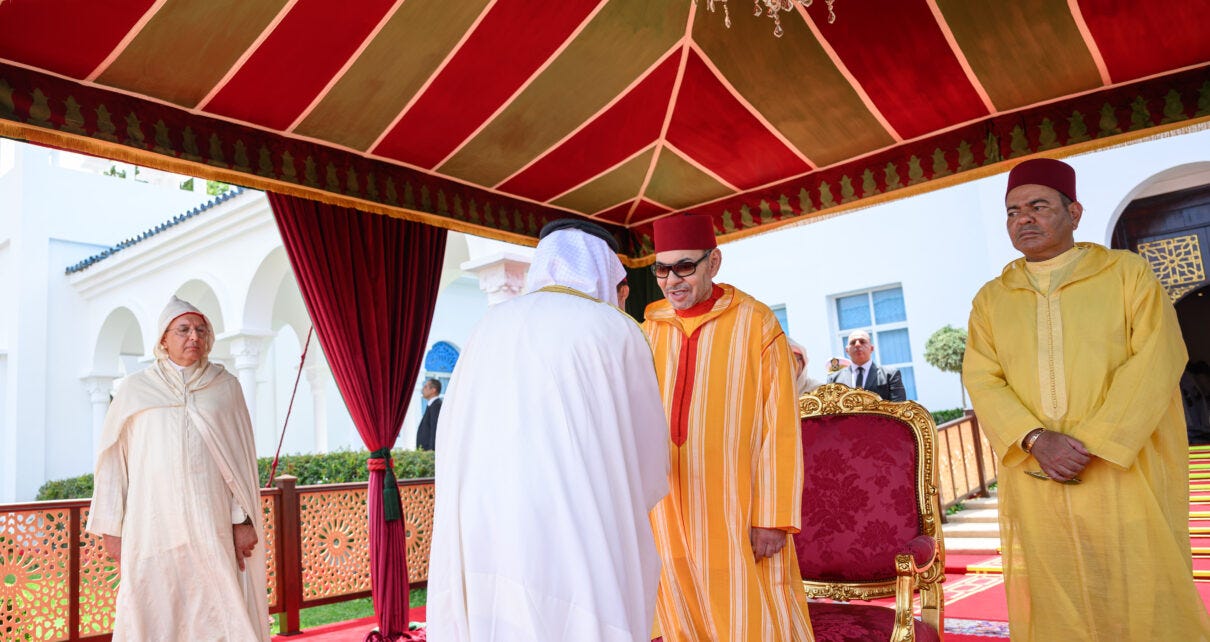
The crisis also exposed the strange direction of Moroccan nationalism. The palace presented Ceuta as unfinished decolonization, yet its campaign against Spain increasingly depended upon support from Israel and its allies in Washington. A territorial claim presented as an assertion of Moroccan sovereignty was being advanced by foreign political networks pursuing their own conflict with Spain.
In the end, Morocco succeeded in placing enormous pressure on Ceuta, but it did so by exposing its own failure. The palace could turn the border into a weapon only because so many Moroccans were willing to risk their lives to cross it. On the day intended to celebrate the king’s achievements, his own subjects delivered the clearest possible verdict on the country he had built: when the border opened, they ran.
This was the first article I ever read on this platform. Incredibly informative.