

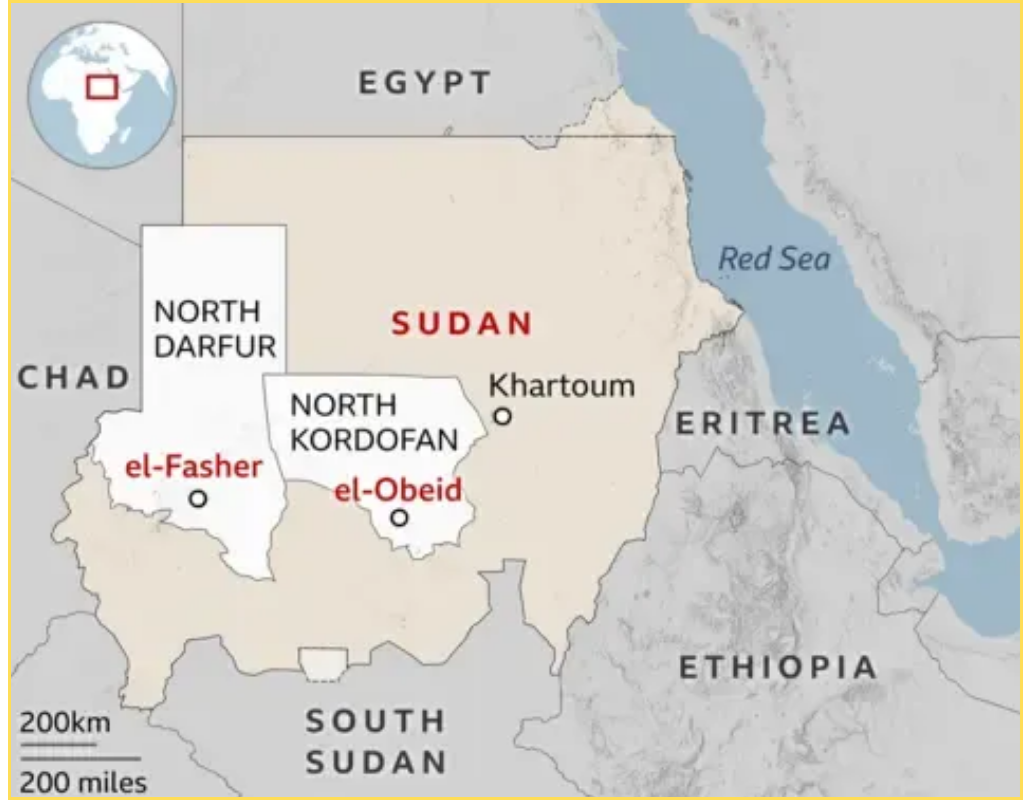
For most of June, El Obeid appeared destined to become the site of Sudan’s next major battle. The Rapid Support Forces had assembled a large force around the North Kordofan capital, surrounding it from the west, north and south while launching a sustained campaign of drone attacks.
The sequence suggested that a ground assault was approaching. The drones struck fuel stations, water infrastructure, electricity generators, markets and vehicles entering the city. By destroying the systems sustaining both the Sudanese military and the civilian population, the RSF could weaken El Obeid before committing its forces to an urban battle. But the expected assault did not come.
Instead, fighting erupted more than 400 miles to the west, along Sudan’s border with Chad. The SAF-backed Darfur Joint Forces advanced from the border town of Tina into North and West Darfur, forcing the RSF to redirect troops that had been assembled for the El Obeid offensive. At the same time, stronger Sudanese air defenses began intercepting some of the paramilitary’s most expensive long-range drones.
The immediate threat of a ground attack has receded. The threat to the people of El Obeid has not. The RSF remains positioned around the city, its eastern lifeline remains under attack and the destruction inflicted during June continues to deepen shortages of water, fuel, food and electricity. El Obeid has received a military reprieve. Its civilians have yet to receive relief.
the gateway to western sudan
El Obeid is more than the capital of North Kordofan. It is the principal junction connecting SAF-controlled northern and eastern Sudan with Kordofan, Darfur and the country’s south.
. . .
The rest of this article is available to subscribers. Subscribe for free to continue reading.