

Before I publish an analysis of what is happening in the Blue Nile state in Sudan, we need to revisit a key driver of regional tension: the Grand Ethiopian Renaissance Dam (GERD).
GERD sits in Benishangul-Gumuz, which is the same western Ethiopian region now being referenced in allegations about cross-border activity tied to Sudan’s war.

This overlap between Sudan’s battlefield and Ethiopia’s most strategically sensitive infrastructure zone highlights a strategic reality, that a stronger Ethiopia benefits actors who are seeking to completely reshape the balance of power along the Nile and the Red Sea.
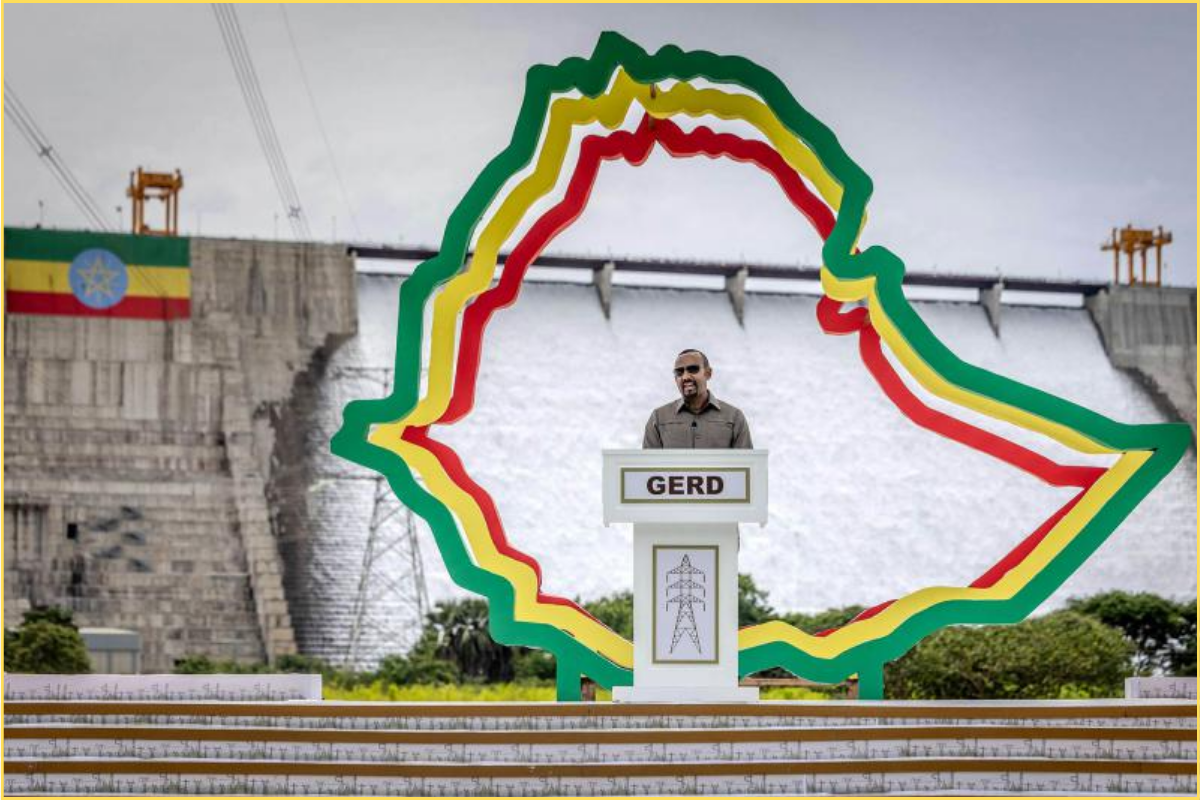
Setting aside the United Arab Emirates, whose material and logistical interests in the Red Sea corridor are evident, Israel has long treated Nile politics and Red Sea dynamics as strategically relevant. Under Prime Minister Abiy Ahmed, Ethiopia and Israel have expanded economic, technological, and diplomatic cooperation. At the same time, the conflict in Sudan shows little sign of ending soon; Eritrea remains strategically vulnerable (with a population of roughly 3–4 million compared to Ethiopia’s more than 120 million); Somaliland’s legal status remains unsettled, with Israel publicly and the UAE more quietly pushing for changes to that status; Egypt continues to frame Nile water security as existential while warming relations with Turkey, a key partner of Somalia’s federal government.

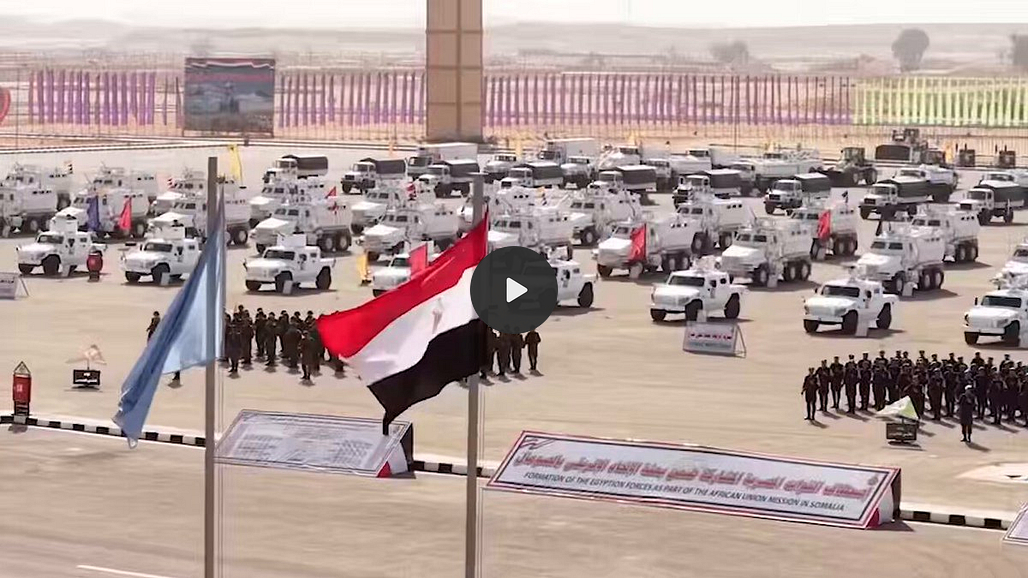
At the same time, Cairo has deepened security coordination with Eritrea, Djibouti and Somalia, deployed forces to Somalia under an African Union mandate, and signed port and security agreements with Eritrea (in Assab, a port of strategic interest to Ethiopia) and Djibouti (in Doraleh, a key commercial port Ethiopia currently relies on, as a landlocked country) that expand Egyptian naval access along the Red Sea corridor. Egypt has also strengthened ties with Saudi Arabia, forming a loose alignment of states whose interests increasingly converge around counterbalancing Ethiopia’s regional ambitions. While these arrangements stop short of a large permanent Egyptian base, they signal a deliberate effort to position military access points around Ethiopia’s maritime flank.

None of these developments exist in isolation.
A stronger Ethiopia, with consolidated western borders, potential influence over a Sudan led by the RSF, a Red Sea coastline with a navy, and full operational control over the Nile’s most consequential upstream project, would significantly affect the balance of power in the Horn of Africa and the strategic pressure on Egypt would likely intensify south and east of its borders.
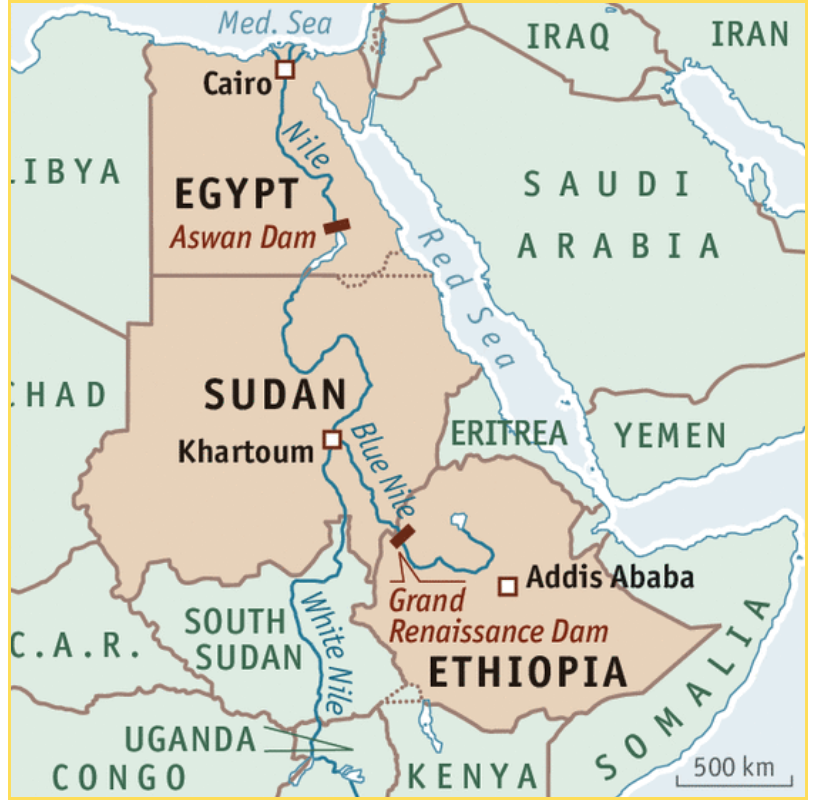
The document below, published in August 2020 by the Al-Zaytouna Centre for Studies and Consultations in Beirut, examines the argument that Israel has strategic interests in how this regional balance evolves.
Whether one agrees with all of its conclusions or not, it offers a framework for understanding why GERD is not merely an infrastructure project and why developments in Blue Nile State in Sudan, Egyptian–Ethiopian tensions over the Nile, and the broader Red Sea power contest involving Ethiopia, Eritrea, Israel, the Gulf states, Somalia, Djibouti, Sudan, Turkey, Houthis/Iran and the U.S. cannot be treated as separate files. They interact, overlap, and increasingly shape one another.

Great report thank you!